Tuesday, March 26, 2013
Viridiana (Luis Buñuel)
Saturday, February 16, 2013
The Master (Paul Thomas Anderson)
Friday, January 11, 2013
L'Age d'Or (Luis Buñuel)
Wednesday, January 9, 2013
Scorpio Rising (Kenneth Anger)
Sunday, December 30, 2012
Fanny and Alexander (Ingmar Bergman)
Sunday, December 23, 2012
Nights of Cabiria (Federico Fellini)
Monday, September 24, 2012
Through a Glass Darkly (Ingmar Bergman)
Thursday, September 13, 2012
Stalker (Andrei Tarkovsky)
Sunday, September 9, 2012
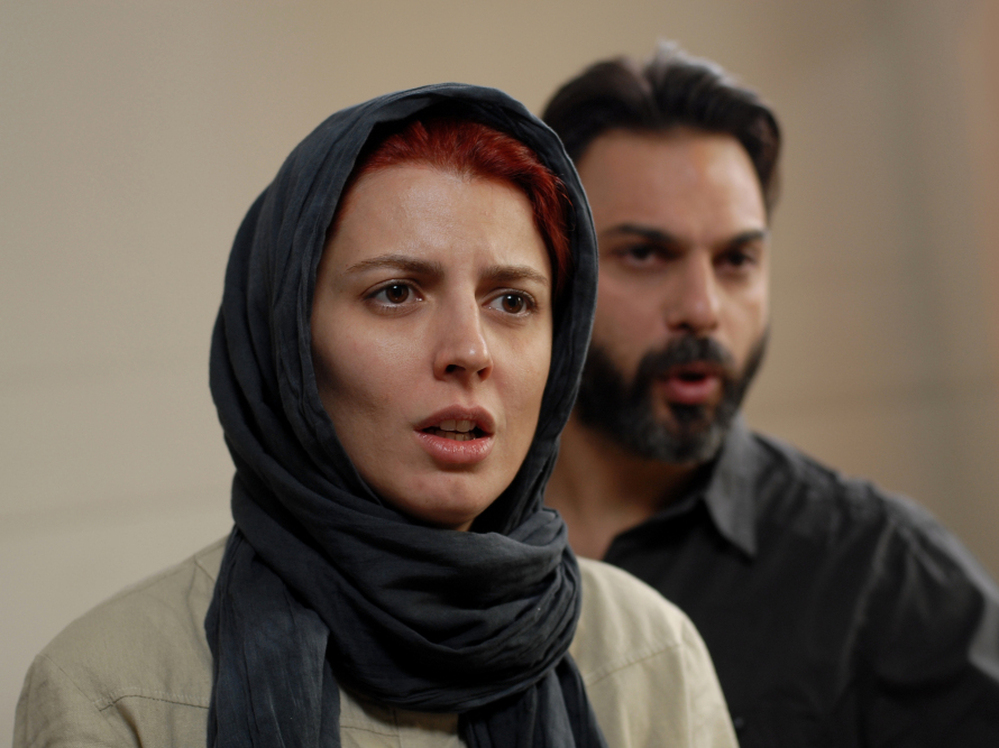
A Separation (Asghar Farhadi)
Tuesday, March 20, 2012
Corazon: Ang Unang Aswang (Richard Somes)

In his interview, Richard Somes stated that with "Corazon", he has created a sort of origin story that will back up the whole "Aswang" lore that he has lovingly used in his films. For that matter, with this film, I think that he has embraced and contradicted his statement at the same time; embraced because, as we can all see, "Corazon" is a well-weaved (if not too melodramatic) tale that can really pass us a potent origin tale. But on the other hand, it is a contradiction because, at the end of the film, he has realistically told the tale of 'how' it might have been but he never convincingly stated as to how this could pass as a real 'Aswang' story in the first place.
"Corazon", stripped off of all the folklorian associations, is more a dark psychological film rather than a red-blooded creature feature. With its narrative that immediately connects the whole film's nightmarish ordeal with the hellish Japanese occupation (the film is, after all, a post-Second World War period piece), the paranoia of social discrimination and the flaws of an unguided devotion towards an abstract God, it's quite easy to surmise, through those key ideas, that "Corazon" is more of a sociocultural exploration of the so-called "Aswang" mythos rather than a strictly supernatural one. "Corazon" is your type of "Aswang" film that treads not the 'garlic' surface of it all, but the darker recesses of human frustration and perversion that may 'realistically' lead to something akin to a monstrous metamorphosis.
In terms of the film's whole tone, "Corazon" is sadly less atmospheric than the earlier "Yanggaw", though both boast of beautiful cinematography. And also, "Corazon", with its veritable approach to the "Aswang" lore, is arguably more prone to unintentional comedy. For more supernaturally-oriented films of the same kind, kinetically fast-paced motions of the said creatures are, more or less, understandable. But in "Corazon", with the titular character, a shy young woman, suddenly going quick in his feet as he succumb into a form akin to a monstrous stalker (specifically of children) merely because of a psychological lapse, such rapid change in both behavior and physicality is, I'm afraid to say this, quite laughable in some ways (with the audience's half-serious reaction in the theater that I've watched it in as my witness). Narrative-wise, it is excusable because although how realistic the approach may be, in the end we are still talking about garlic-fearing monsters here. But in terms of character transformation, this treatment to Corazon, from a suppressed woman to a monstrous murdering specimen without even a hint of supernatural intervention, just isn't believable.
But then again, maybe this lack of believability may have rooted from the choice of actress, which completely opposes the back story of Corazon herself. Erich Gonzales, playing the role of Corazon, is beautifully enigmatic and emotionally fragile. But this enigma and fragility is, more or less, leaning more towards the perennially 'Maria Clara'-type, not the 'reformed former prostitute who catered to Japanese soldier' kind. On the other hand, Derek Ramsay's Manuel, Corazon's husband, is a bit one-dimensional (I think the scenes of him holding his knife outweigh those which he does not) but also had his fair share of good moments. While the whole community in the film, however, that which includes the characters played by Mon Confiado and Epi Quizon, was reduced into nothing but a cinematic stereotype whose basic traits include bullying the resident mental case (Tetchie Agbayani) and discoursing about plagues and overall doom by way of their contemplative old-timers.
In its entirety, "Corazon", with its subtitle "Ang Unang Aswang", supernaturally speaking, never really proved to be a convincing origin story or a prequel that can support the events that has transpired in such films as "Yanggaw" or the overall notion as to how these most feared creatures, at least here in the Philippines, came to be. What "Corazon" has done, instead of delivering the immediate epistemology of our local boogeymen, has tackled the so-called origins of 'Aswangs' through sociocultural eyes, with the very 'origin' itself leading not to the exposition of the supernatural creatures' 'humble' beginnings but to the creation of our most primal of fears towards the unexplainable.
Every peculiar sound in our tin roofs, every weird sound in the woods and every howling dog deep within the night, there's this unconscious instinct within us all that immediately associate them to these carnivorously supernatural creatures of the night. "Corazon" strongly suggests a fictitiously alternative reason as to why we do.
Wednesday, September 21, 2011
Hinugot sa Langit (Ishmael Bernal)

I have always been fond of Maricel Soriano’s acting range. Be it her occasional noisy self via her comedy films, usually with Roderick Paulate, William Martinez and Randy Santiago, or her truly intense side conveyed through her penetrating eyes, facial expressions and startling line deliveries. Here in Ishamel Bernal’s “Hinugot sa Langit” (written by Amado Lacuesta), the latter is in full display, and not just for show, but a beautiful character representation of a master’s vision of morality (and an adamant view of religious zealotry and hypocrisy) and how modern living, as what Amy Austria’s character Stella stated, requires it to be compromised.
At first glance, or specifically almost half-way into the film, it seems as if it is just a melodramatic story about a young woman named Carmen (played by Maricel Soriano) whose unexpected pregnancy (and worst of all, with a married man) unwillingly plunges her neck-deep in a narrow well filled with crucial choices, heavy-handed decisions and a brooding sense of social stigma. So the film's initial conflict is this: To abort or not? But then aside from that, the film gradually becomes denser in its thematic content. Tackling such themes as death, poverty and cynicism (the same ones that Ishmael Bernal has finely tackled in his masterpiece “City After Dark”), “Hinugot sa Langit” stopped from being a simple dramatic film and turned into yet another multi-faceted exploration of a Filipino society inflicted with distorted moral values, helpless lower class struggles and meaningless romantic flings.
Ishmael Bernal was able to create a perfectly contrasting balance between Carmen’s subdued yet panicky characterization and her cousin, Stella’s loquacious exterior and cynical pragmatism. Although the Stella character seems to be a bit clichéd in its depiction of a desensitized individual conforming herself with an immoral social stream, Amy Austria portrayed the character with a mark that is her own and, considering the moody atmosphere of the film both in cinematography and motifs, is the energetic center of the film that is also the closest thing “Hinugot sa Langit” can get to a slight comic relief.
And then there’s the legendary Charito Solis’ performance as Carmen’s overly religious landlady Juling (that also puts her in the ‘Alive! Alive!’ social stereotype) that evokes suggestive villainy out of her ‘not practicing what she preaches’ type of character arc. It’s also a pure breath of fresh air from her previous, though equally iconic, roles. From her past film projects prior to “Hinugot sa Langit”, she has played the titular “Ina, Kapatid, Anak” (along with Lolita Rodriguez), the martyr wife in “Kisapmata” and the former prostitute mother in “City After Dark”.
With her playing a role that is not an immediate kin to our main character, it exemplifies freshness in characterization and also puts a mysterious depth in her portrayal of a landlady that, in the first place, should have been very well detached emotionally from Carmen’s very personal life but instead slowly takes form that is akin to a possessive mother.
Aside from the unnecessarily happy ending that is a staple for run-of-the-mill Filipino melodramas, the film is a powerful meditation not just of abortion but the overall existential sprawl of social hardships and endless hypocrisy. But its hypocrisy, as what may be the common conception, doesn’t just root out from the film’s portrayal of religion.
There’s this powerful scene near the end of “Hinugot sa Langit” where Carmen, pounding and beating angrily at Mang David (the late Rey Ventura) after he stabbed Aling Juling, exclaimed “Wala kang karapatang pumatay!”, then cut to Carmen’s half-second facial shift from the one accusing to the one accused.
Through this important sequence, Bernal unearthed the sensitive subject of ‘murder’ both in its bloodily immediate connotation and its clinically-assisted one, brought it in an ambiguous light and never sided with any argumentative absolutes. Instead, the said scene puts a simple question in retrospect and symbolically shoves it in Carmen’s very face: “Look who’s talking?”