Wednesday, March 26, 2014
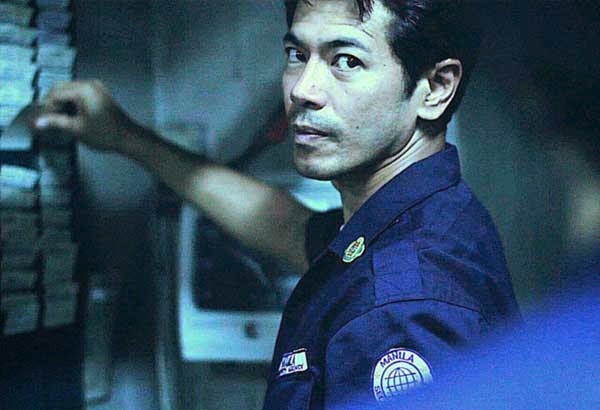
Metro Manila (Sean Ellis)
Thursday, December 27, 2012
Children of Paradise (Marcel Carné)
Tuesday, December 18, 2012
Jules and Jim (Francois Truffaut)
Monday, May 28, 2012
The Skin I Live In (Pedro Almodovar)
Tuesday, March 20, 2012
Corazon: Ang Unang Aswang (Richard Somes)

In his interview, Richard Somes stated that with "Corazon", he has created a sort of origin story that will back up the whole "Aswang" lore that he has lovingly used in his films. For that matter, with this film, I think that he has embraced and contradicted his statement at the same time; embraced because, as we can all see, "Corazon" is a well-weaved (if not too melodramatic) tale that can really pass us a potent origin tale. But on the other hand, it is a contradiction because, at the end of the film, he has realistically told the tale of 'how' it might have been but he never convincingly stated as to how this could pass as a real 'Aswang' story in the first place.
"Corazon", stripped off of all the folklorian associations, is more a dark psychological film rather than a red-blooded creature feature. With its narrative that immediately connects the whole film's nightmarish ordeal with the hellish Japanese occupation (the film is, after all, a post-Second World War period piece), the paranoia of social discrimination and the flaws of an unguided devotion towards an abstract God, it's quite easy to surmise, through those key ideas, that "Corazon" is more of a sociocultural exploration of the so-called "Aswang" mythos rather than a strictly supernatural one. "Corazon" is your type of "Aswang" film that treads not the 'garlic' surface of it all, but the darker recesses of human frustration and perversion that may 'realistically' lead to something akin to a monstrous metamorphosis.
In terms of the film's whole tone, "Corazon" is sadly less atmospheric than the earlier "Yanggaw", though both boast of beautiful cinematography. And also, "Corazon", with its veritable approach to the "Aswang" lore, is arguably more prone to unintentional comedy. For more supernaturally-oriented films of the same kind, kinetically fast-paced motions of the said creatures are, more or less, understandable. But in "Corazon", with the titular character, a shy young woman, suddenly going quick in his feet as he succumb into a form akin to a monstrous stalker (specifically of children) merely because of a psychological lapse, such rapid change in both behavior and physicality is, I'm afraid to say this, quite laughable in some ways (with the audience's half-serious reaction in the theater that I've watched it in as my witness). Narrative-wise, it is excusable because although how realistic the approach may be, in the end we are still talking about garlic-fearing monsters here. But in terms of character transformation, this treatment to Corazon, from a suppressed woman to a monstrous murdering specimen without even a hint of supernatural intervention, just isn't believable.
But then again, maybe this lack of believability may have rooted from the choice of actress, which completely opposes the back story of Corazon herself. Erich Gonzales, playing the role of Corazon, is beautifully enigmatic and emotionally fragile. But this enigma and fragility is, more or less, leaning more towards the perennially 'Maria Clara'-type, not the 'reformed former prostitute who catered to Japanese soldier' kind. On the other hand, Derek Ramsay's Manuel, Corazon's husband, is a bit one-dimensional (I think the scenes of him holding his knife outweigh those which he does not) but also had his fair share of good moments. While the whole community in the film, however, that which includes the characters played by Mon Confiado and Epi Quizon, was reduced into nothing but a cinematic stereotype whose basic traits include bullying the resident mental case (Tetchie Agbayani) and discoursing about plagues and overall doom by way of their contemplative old-timers.
In its entirety, "Corazon", with its subtitle "Ang Unang Aswang", supernaturally speaking, never really proved to be a convincing origin story or a prequel that can support the events that has transpired in such films as "Yanggaw" or the overall notion as to how these most feared creatures, at least here in the Philippines, came to be. What "Corazon" has done, instead of delivering the immediate epistemology of our local boogeymen, has tackled the so-called origins of 'Aswangs' through sociocultural eyes, with the very 'origin' itself leading not to the exposition of the supernatural creatures' 'humble' beginnings but to the creation of our most primal of fears towards the unexplainable.
Every peculiar sound in our tin roofs, every weird sound in the woods and every howling dog deep within the night, there's this unconscious instinct within us all that immediately associate them to these carnivorously supernatural creatures of the night. "Corazon" strongly suggests a fictitiously alternative reason as to why we do.
Thursday, November 24, 2011
Another Earth (Mike Cahill)
Unusually, the film is founded by two narrative extremes: One is its angle of human drama, which exemplifies simplicity in approach, and the other is its transcendental vision, which highlights the film's ambitious scope. With this kind of double content which may risk the equal depiction attention of both ends, balance is most important, and the film, for that matter, does not disappoint.
Mike Cahill, who directs his first cinematic film (his previous one, co-directed by Brit Marling, being a documentary), did what most fresh filmmakers must do, and it is to enter the film scene not with anxieties and insecurities of visions, but with utter confidence and a slight dash of flamboyance. Such ideas like this one here in "Another Earth" admittedly does take a lot of guts and unbounded devotion to really pull off and be successful in its execution. And of course, such far-reaching exercise of the imagination do need a 'more than adequate' budget, but the film nevertheless proved that it isn't always the case, and that often times than not, mind outweighs currency, vision exceeds the means and conceptual quality reigns over monetary quantity. Even just for that reason alone, "Another Earth" should be viewed as an ideal celebration of the creative affluence of the independent film spirit.
The performances in the film, although done by fairly unknown performers, were still able to convey the film's dramatic essence. Brit Marling (also the film's co-writer), who plays the film's main character Rhoda, is assured and effectively compact in her portrayal of a young woman and her guilt-ridden (because of her involvement in a tragic car accident) descent into a directionless existence. Although Marling's character is a fairly complex role to play with her constant transformation from being lost, finding herself, being lost and finding herself again, her performance captured Rhoda's lack of existential motivations early on in the film that it made her character simpler to empathize with.
William Mapother, playing John, is quietly affecting in his portrayal of the anguished musical composer/professor who lost his family in the said accident, is blank-eyed in his detachment from life, but whose connection with Rhoda, being unaware of her involvement in the accident, soon slowly brings him back into its tender symphony.
"Another Earth", although as what I've said earlier, purely relies on the counterbalancing of its main dual content (simplistic human drama and grandiose sci-fi vision), it's also significant in its subtle irony. What if in the aftermath of death there's more to life? What if in tragedy there's love? What if in the presence of a celestial wonder there's disillusionment? "Another Earth" can only contemplate the answers, but rest assured, it's inclined towards what's more hopeful.
Wednesday, September 14, 2011
The Fly (David Cronenberg)
Metamorphosis.Now, moving on, I think it's quite refreshingly sardonic for director David Cronenberg and screenwriter Charles Edward Pogue (who adapted his screenplay from the 1958 original and also from the George Langelaan short story) to use an irrelevant insect to shockingly introduce us to the narrative's true frightening pulse. The film could have also worked on a much lighter level if its anomaly would have rooted out from the simple idea of the teleportation device itself, but the film took this common science fiction nugget into the real extremes, not just for the sake of it, but to offer something more.
Now we see the downside of intellectual grandeur not just by how it portrays the toll it gives to a man who has one mentally and socially (living in isolation, a lousy hair, Einstein references and the like), but also physically. The film of course focused more on the very last. But that focus that may seem, at first glance, too shallow a center point for a film, was emotionally balanced by enough doses of drama and "Frankenstein"-ish goth romance. What differentiates "The Fly" from Mary Shelley's literary classic, though, is how the first specifically merged both the 'fiend' and Victor Frankenstein in one wholeness, in the form of Jeff Goldblum's Seth Brundle character.
How he turned into that ghastly, slimy and monstrous creature, that is where the story's Olympian god-like intervention and alteration of the characters' motives and actions take full command of the film. Like the fly inside the teleporter plot mischief, Seth Brundle's motive as to why he carelessly attempted (and technically succeeded) to teleport himself was for one simple reason. No, not those complex internal conflicts regarding a self-debate of how he can change the world and himself by way of molecularly transporting himself through electricity and wires and stuff, but for the simple fact that he was crazy drunk (with a baboon as sole company) during the time.
Like the Coen brothers that seem to laugh at their protagonist's (especially in their neo-noirs) own misdemeanors and faux pas as they go helplessly and hay-wire insane from one situation to another, Cronenberg brilliantly manifests this unconscious natural albeit peculiar flow of existence that purely enunciates that sometimes, things, particularly the crazy ones, just happen. But from this initial, almost comic-like hammering of nails to seal Brundle's 'unfortunate fate', "The Fly", after being initially founded by an uneasy but evidently passionate romance between scientist Seth and journalist Veronica (played by Geena Davis, who later became more renowned as Thelma in "Thelma and Louise"), is emotionally intensified not mainly by its visual horror but by the sheer idea of love.
Through this way, the film became more or less a much relentless horror. A horror of choice. The film instantly became more concerned not about who kills who or who goes where or who decapitates which body part, but what it really takes to give up something. Would you relish love all the same even when the one you continuously love is a physical manifestation of hate and disgust? "The Fly", surprisingly, answered immediately with a not-so-subtle shotgun blast, then a fade to black. Not seeing what happens next is an extreme rarity among science fiction horrors. Not even the most recent "Splice" denied us a peak of an uncertain epilogue.
This is the thing that will surely be a constant reminder as to why I 'll always place "The Fly" on a separate field of existence, far from other films of its kind. It is this brave adamant stance to refuse us the answer to the question "What happened next?" that took me into "The Fly's" almost hypnotic spell of fright, bodily fluids and mad love.
It is this film's shining ability to just live in the moment, the beginning, middle, end and all, and forget about any prolonged post-carnage drama that convinced me of its audacious greatness. Fast-forwarding through the film in weary anticipation of a surprise post-credits sequence and subsequently finding out that there's none, there's this slight sigh of relief. Post-carnage drama? I believe Veronica's brief but infinitely tragic weeping is enough. I was moved, alright.
Wednesday, April 20, 2011
Jaguar (Lino Brocka)
Phillip Salvador is perfect as Poldo, a security guard hired as bodyguard by his boss (played by Menggie Cobarrubias, one of the great local character actors whose name you probably would not know, but whose face you probably have seen in a gazillion Filipino movies. Google him, if you may) after being impressed with his fisticuff abilities. Unconsciously influenced by his own gullibility towards a temporary bliss of nightclubs, liquors and women, he went on with the flow. Little did he know that it will transform into a flood that will consume what is left of his simple sailboat unexpectedly adhered into a yacht of sin.
I do not want to delve into Phillip Salvador's scenery-chewing habit nowadays, but before, he was a damn great actor. And reflected by this film and "Bona", he is the most convincing of all Filipino actors to portray, then contrast, the transitional qualities of a house authoritarian (his character Poldo's erratic behavior in their house) and an idiotically-treated guard (just like how his complicated character in "Bona" changes effortlessly from being a dominant household slacker into a faceless action movie extra). Aside from the naivete which he depicted perfectly, there's one key sequence in the film which screenwriters Pete Lacaba and Ricky Lee have written with precise behaviors and wordings, and handled by Lino Brocka with an impeccable attention in mood-heightening.
It's a scene where Poldo's boss and his other rich friends visit their house located in the filthy slums for the fiesta. We see Poldo talking and acting frantically, ordering for the foods to be prepared, even shouting to his mother to move faster. Then he looks to his high brow visitors with an apologetic look and a controlled smile. Brocka emphasized Salvador's character to appear very diligent, not as a host, but as a lowly 'waiter'. Brocka caught his character's splitting persona (that of a house authoritarian and a servant) and enclosed it in the said sequence. To put these in such a brief moment in the film is truly masterful in the sense of how it was handled without such a simple scene looking over-treated.
Of course, "Jaguar" is primarily made for us viewers to care for Poldo the guard, but on the other hand, the film also reverses its focusing lens to glare at the obviousness of his numerous moral shortcomings. Do we sympathize with his predicament despite his initial patronization of the decadent glamors of the rich? Do we still care for him even though he has unconditionally bowed down to these people's ways? Those which led to his moral bondage? These questions were continually raised throughout the film, but again, like almost all great films, "Jaguar" never settled for any closed answers or absolute closures.
Poldo leaves his house straight-laced and seemingly looking for nothing but a steady pace of income. He crosses a plank slightly elevated from the filth of the dark waters of the sewers. Halfway, the plank falls down. Apathetically, he jumped the remaining distance into dry soil, without looking back, and into his work. If that's not foreboding, then I do not know. But only if he knew...
Monday, April 18, 2011
Tatlong Taong Walang Diyos (Mario O'Hara)
Chance.The film started with Hitler's rhyming, mouth-foaming speech regarding the strength of his socialist party. Being set in the times of the Second World War, the film unveils like how a history text book would for a student. But after this run-of-the-mill introduction, its story unfolds like how a poet affects to even the farthest of souls.
In plain sight, the film may look like your typical 'love caught by the tides of war' and a period vehicle for its star and producer, Nora Aunor. Granted, the love story arc is already established prior to the complications of the narrative, but I am deeply surprised and pleasured how complex the film really was.
At various points, "Tatlong Taong Walang Diyos" can be viewed as a metaphor for the ravages and ruins that the Philippines (The idea of the motherland may allude to Nora Aunor's (subtly powerful, as always) character Rosario and her initial abuse in the hands of Masugi, played by Christopher De Leon) have experienced during the Japanese Occupation and, on the opposite end, the potentially unconscious development of the Philippines' slow embrace towards the Japanese ways (how Rosario learned to love Masugi after she has been raped).
And pushing it further, Bembol Roco's character Crispin is the physical manifestation of the concept of a true 'Filipino' who, despite of the predicament that his real love (Rosario) has gone through, remained completely absent and consumed by fighting an abstract notion towards an illusory, national deliverance. The film may also relate to a slightly satiric approach to some Filipinos' extreme devotion to the perpetually clean-cut view of America and their intervention.
Mario O'Hara, a primed director and a memorable actor by his own right due to his performance in Brocka's "Tinimbang ka ngunit kulang", created this film with a certain honesty and a hint for something new. He dared not to mold a war film with old clays of sentiments and melancholy. He instead established a fresh foundation to the film, making the complexity of love and the ambiguity of Catholicism its true center and added up the hypnotically repugnant, yet may have been quite accurate, emotional weather of the time.
"Tatlong Taong Walang Diyos" never settled for a one-sided rally behind patriotism's usual sweet myth-making; director Mario O'Hara treated the Filipino people (that includes the Guerrillas) not as hopeful revolutionaries that can almost dwell on the pages of a legend, but as a confused crowd dipped into a mudflow of fever and hysteria: looking for even the slightest mistakes, violently ditching even the slightest idea of a socially unsanctioned love, and pointing fingers to even the slightest of flaws.
Nora's Rosario, on the other hand, served as their martyr; their miniature 'Joan of Arc' to make up for the futility of their distorted search for something meaningful. A senseless pervasion of mobocracy masquerading as a push for Philippines' well-being and disguised as a search for national identity.
The film covered so much, yet it came out as a simple tragedy of love. Deep analysis or surface viewing, either way, "Tatlong Taong Walang Diyos" is still a tremendous work of Philippine cinema. Where is film preservation when it's needed most? This film begs for a better print. Too bad it's too late.
Saturday, February 5, 2011
Nixon (Oliver Stone)
Nixon, Lincoln, and War.It was said that Mr. Hopkins' portrayal of the mysterious American President was ''miraculous'; that, I think, is still an understatement. Hell, I even consider 'divine transformation' a slight complement. Though carrying the burden of being 'too British' in playing one of the representative American figures of the 70's, Mr. Hopkins played the part very convincingly, commanding the screen with his subtle smiles and desperate tantrums that even though his voice and features were nothing compared to that of the real Richard Nixon, he has able to embrace and embody his fragmented persona successfully.
The 1970's is the defining era of America, giving way for the birth of subversiveness and counterculture, hippies and pseudo-communists, paranoia and conspiracy, the Vietnam War and Fidel Castro. It also revealed the side of America few had ever anticipated: rebellious, restless, radical, but quietly revolutionary. It may look far-fetched but I can't help but see "Easy Rider" as a great companion piece.
Nixon may have left a trail of scandals and intrigues, but seeing the era's descriptions and seeing his, it's a perfect duo of revelation; yes, it has paved way for the wild side of American culture, but it has also undoubtedly molded it.
The United States of America. 'The Land of Promises'. Oh, how it continuously preached about the Great 'American' Dream, yet the Great 'American' Tragedy merely resides in its highest office playing on and on. We'll never know if Nixon really resigned in pride or in guilt. The Watergate. The Bay of Pigs. The ill-advised bombing of Cambodia. All incriminating devices for 'Nixon the politician'. but Stone, looking more humanistic and less political than ever, used them as mediums to expose the heart and soul of 'Nixon the man'. In the film, I distinctly remember what Nixon said about the Kent State massacre: "I'd like to offer my condolences to those families. But Nixon can't."
The grocer's son is indeed not as heartless as everyone thinks.
Sunday, January 16, 2011
Hamlet (Kenneth Branagh)
4 hours long? "To be or not to be."But Kenneth Branagh, who also directed the film, added an energetic haze into the Prince's persona, turning him from a quiet rebel into an unpredictable, flamboyant protagonist, playing out the character with both loud intensity and emotional subtlety. Through its running length of 4 hours, though there are some clever use of quick editing, Branagh's "Hamlet" may very well be one of the cases of "substance over style", championing the sheer strength of Shakespeare's material too much that the film itself sometimes becomes unconscious of its cinematic audience and that some of it actually looked very much "theatrical", save for the live sets.
If I have to pick the best "Hamlet" adaptation from the 3 which I have seen, I have to say the Laurence Olivier version, with this and Franco Zeffirelli's tied; Though this film version is good, I thought its visuals were too pretty to completely emphasize the core of the play, yet it's (the visuals) also one of the film's main points that made it much more accessible than the other versions. I'm really unsure on what to say about this film, but maybe it's an unconscious psychological effect from the "man that could not make up his mind".
Macbeth (Roman Polanski)
Torment, ambition and lust for power.It's great to hear the deep, flowery Shakesperean words, but what makes this film much more than a screen adaptation of one of his works is how Polanski has made it: Full of imagery bordering insanity and nightmare, performances teetering between stagy rhetorics and tragedy personified, the pure green fields of Wales as the stage for the depressing sight of the lonesome Cawdor castle, and the painful, furious emotions seemingly incorporated by Polanski himself (wife Sharon Tate being murdered just years prior to the filming of this picture).
Now, back to being "accessible", if I'm going to recommend a Shakespeare adaptation that can tell the story easily without the laborious chore of comprehending the playwright's complex language, then I'm going to say "Throne of Blood" by Akira Kurosawa, albeit it being set in feudal Japan. But if one wants to see the pure power of the play, heightened by a master filmmaker's great vision of Macbeth's slide into ruthless lunacy, then "thou shalt not look further". I do not know whether that came out sounding like one of the ten commandments, but there you go.
1001 Movies You Must See Before You Die