Showing posts with label science fiction. Show all posts

Monday, May 26, 2014

X-Men: Days of Future Past (Bryan Singer)

Wolverine to Mystique: "Let's reboot this shit, bub!"

Before anything else, let me just say, with utter conviction, that “X-Men: Days of Future Past” is not the masterful “X-Men” movie that many people are making it out to be, because Matthew Vaughn’s “X-Men: First Class” is leagues better. And, yes, screw those who think otherwise. I’m not kidding. No, really, I’m just playing with you. Now stop staring at me as if I killed Kennedy!

Seriously though, while I don’t really get the enormous hype surrounding this film, I understand why it’s easy for people to label this one as the greatest “X-Men” movie out there. Of course, one of the obvious reasons is its merging of the actors from the original trilogy and those from the prequel into one tremendous ensemble cast. Another is Bryan Singer’s return to the franchise after Brett Ratner and Gavin Hood have turned it into a watered-down joke (even now, I still can’t believe what they did to Deadpool *shudders*). Superficial reasons, those two.

But with that being said, I think it’s quite fair to say that you still can’t go wrong with “X-Men: Days of Future Past” in terms of entertainment, which is often kept crisp by its ambitious thematic flourishes. Yet sadly, narrative issues prevent it from truly being superior to its predecessors. Though this qualm of mine can be heavily attributed to the film’s complete disregard for continuity issues and character inconsistencies (the last time I checked, Kitty Pryde/Shadowcat enters walls, not people’s minds), what I’m pretty sure about is that this is the densest “X-Men” movie of the bunch. However, it has so much going on with it that instead of its narrative strands adding up for a highly satisfactory experience, there’s a feeling that the film, as a whole, never really pushed the envelope further when there’s more than enough space for it. In some ways, Bryan Singer, with a potential super-epic in his hands, has squandered the chance by instead playing it safe, with his intention not on delivering a staggering superhero masterwork but only on rebooting the very franchise he himself has initially helmed. Like a social worker who has handed out a pack of salty instant noodles to a hungry, malnourished refugee, Bryan Singer has fed the franchise and gave it an additional jolt of life, but nothing really long-term, for its continuity issues will always come back to haunt it.

The film, as what is admittedly posh among superhero movies nowadays to bolster their cinematic self-importance, heavily tinkers with history, and for that, “X-Men: Days of Future Past” instantly elevates itself as a different kind of superhero film. But unlike “Watchmen”, for example, which maximizes its use of historical events by integrating them within a most potent and well-built alternate reality, “Days of Future Past’s” dose of history is but a nostalgic ornament, used only to support the story’s “Terminator-like” time-travel gimmick. Also, the way the story tells us that Magneto is involved in JFK’s assassination, unlike how “X-Men: First Class” fits perfectly into the whole Cold War subplot, is a bit forced and inorganic, especially when, you know, “Watchmen” has already made use of that shocking historical event as an interesting plot nugget some years ago. Though on a positive note, they absolutely nailed Richard Nixon this time around without using much prosthetic on the nose part.

In addition, the plot also seems to be so focused on Raven/Mystique (Jennifer Lawrence) being this fate-altering wildcard that Magneto, somnambulistically played by Michael Fassbender, has no choice but to relegate himself to a side villain role despite the fact that the story, if logic is to be followed, dictates that he should be fighting alongside Charles Xavier for survival’s sake. Instead, what he did was telephatically lift a big-ass football stadium, drop it on the White House to trap Richard Nixon and Henry Kiss-Ass-inger, among others, and discourse about mutant respect while being a bit of an ass about it. With him being listed as the number one greatest comic book villain of all time in a list I’ve read quite a long time ago, Bryan Singer and company should have known that Magneto is much better (and wiser) than that. And don’t tell me that he’s merely being his younger, reckless self in this film to excuse his nonsensical Mojo Jojo-like actions. Man, Joker was already as sharp as a shiv and on the brink of breaking both Batman’s sanity and the entire moral fiber of Gotham in “The Dark Knight” and he was not even 30 yet during that time.

But despite all those (it’s really not possible to write a review about this film filled with nothing but rants), the franchise (not just this film) was still more than successful in rebooting itself without recasting any major lead characters or starting from scratch again. When the whole superhero world is scrambling on fast-tracking a remake of this and a reboot of that, the “X-Men” franchise has remained confident about the universe it has built, privy of the numerous shit it has churned out but also aware of the gems it has intermittently created all throughout these years. Though Rebecca Romjin’s blue-scaled seductress will always be my Mystique and Ray Park’s tongue-lashing badass my Toad, “X-Men: Days of Future Past”, though slightly uncalled for, has made the necessary changes to make the franchise more appealing to a new generation of audience. I mean, come on, who would not want to see Jennifer Lawrence in an uber-fit bodysuit?

But on a more serious note, given the film’s star-studded cast, I was surprised that there really weren't any standout performances in it, except for Evan Peters, maybe, who truly rocked his Quicksilver turn, specifically in THAT one scence, which would give the Wachowski siblings a run for their money. Go watch it for yourself. Tyrion Lannister, err, Peter Dinklage, also shines as the hard-to-hate villain Bolivar Trask, who just wants to murder millions to save billions by way of his giant sentinel dudes. Such a sweetie, this guy is, “Watchmen’s” Ozymandias will be happy. A little trivia: Trask was first played by Bill Duke (!) in “X-Men: The Last Stand”. Google him if you may. Now that’s some epic recast.

The CGI fight sequences, although good, are oftentimes too dark and hard to follow, and the sentinels’ bodies sometimes contort in physiologically unrealistic ways. And, seriously, do they really need to recast William Stryker again? I know, “X-Men Origins: Wolverine” is pure dung, but Danny Huston has done a more than decent job in portraying Stryker in it that they should have just used him again instead.

All in all, though I have lots of complaints toward “X-Men: Days of Future Past”, I still thoroughly enjoyed the film for what it is, which is an ambitious, thinking man’s superhero film. In the end, it all comes down to two things as to why I never liked the film that much: either I just was never a fan of “X-Men”, or I am just a much bigger fan of proper narrative continuity.

FINAL RATING
 photo 352.png

Wednesday, May 21, 2014

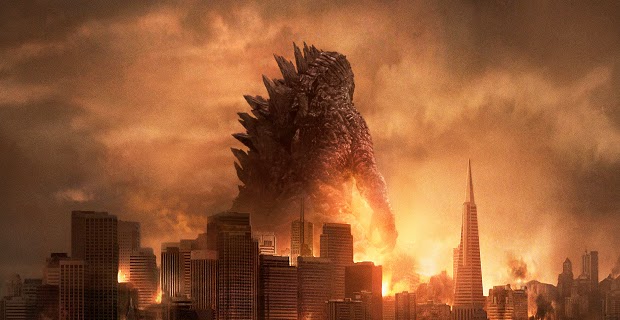
Godzilla (Gareth Edwards)

Kaiju badassery.

If last year’s “Pacific Rim” has offered more than a passing hint of kaiju nostalgia, then this year’s “Godzilla”, Gareth Evans’ modern and westernized take on the monstrous pop culture icon, gives out more than just a splotch of it. And if Roland Emmerich’s 1998 dud of a remake is more about shitting on the entirety of the monster’s mythology and, as much as possible, distancing itself away from its Japanese origins, this one right here, from the title card itself up to the way the music hits certain notes at key moments, is a faithful tribute through and through, if not a bit imbalanced. It boasts of high-end special effects that even the genre itself is yet to be fortunate enough to be often blessed with, and it can also be just as proud with its impressive cast, led by “Breaking Bad’s” Bryan Cranston and reliable Japanese character actor Ken Watanabe.

Just like the very first “Gojira” film in 1954, the “Godzilla” of today is focused on looking at the larger-than-life entity (literally) with a dominantly human perspective. We see Godzilla clash with his monstrous contemporaries (labeled as MUTOs – Massive Unidentified Terrestrial Organism), but often only through express train windows and TV screens and rarely through the ‘monster mash’ point of view that all of us are quite used to, kaiju film-wise (what with those miniature temples and electric posts); that is, until the super awesome final battle.

The problem, though, as what all the other reviewers have noticed, is that the grounded human characters aren’t all that interesting, to say the least. Sure, there’s the uber-talented Bryan Cranston, who often steals every scene (or even each film, for that matter) he’s in and always makes do with what little screen time he has, but his character is one hour gone too early for him to really set in and complement the kaiju action in the film with his acting power.

Aaron-Taylor Johnson, on the other hand, who has already proven his worth with leading roles such as in the “Kick-Ass” films and even in the John Lennon biopic “Nowhere Boy”, struggles because of generic writing, which hinders his character from really growing into someone whom you can really root for at the height of a monster takeover. I’m not a Roland Emmerich fan or anything, you know, but the German lad seems to always have a knack of letting his characters develop into on-screen people you can actually laugh, cry, and be valiant with, all while some form of natural disaster destroys famous landmarks in the background.

Aside from those mentioned above, I also have a slight issue about the film’s way of explaining certain plot details, with Watanabe, who is obviously not the greatest of English speakers, oddly being given the honor to deliver the film’s exposition-heavy dialogues. Maybe I’m asking too much now, but Cranston should have easily been given that task because, what the hell? That man can have an intense on-screen meltdown and still intelligibly discuss perhaps even the hardest parts of rocket science with great ease.

But with that being said, as a movie fan who’s really bent on having his money’s worth with a film entitled “Godzilla”, I was still more than impressed. I mean, do you really expect this film, which is essentially about an atomic-breathing dinosaur that often fights off monsters of varying sizes, to really go on great lengths to profoundly discourse about the human condition? Go grab a Tarkovsky film or something, you sniveling snob. This is about a prehistoric apex predator which destroys buildings and creatures slightly lower to him on the big-ass kaiju food chain on a whim, and the film never wasted a minute to visually tell us anything but that. Though there are mild attempts to show Godzilla’s connection with the human populace (there was a brief scene where the creature and Aaron Taylor-Johnson’s character shared a brief yet knowing glance), what the film is really recklessly careening into is the climactic kaiju battle that puts those in “Pacific Rim” to utter shame. And just like the moment when Gypsy Danger finally unleashed his retractable sword, “Godzilla” has pumped up my adrenaline level to an unbelievably crazy height, especially when I finally saw bluish hints slowly accumulating along the monster’s spine, which, as we all know, is followed by its atomic belch, err, breath.

If you’re looking for a monster film that fulfills its promises and more, “Godzilla” will never disappoint a living soul, except of course those who still strangely consider Emmerich’s version as some kind of canon and expect Godzilla to once again brainlessly wreak havoc on Manhattan and chase a merry band of survivors led by Ferris Bueller. If for anything else, “Godzilla” successfully shows a new generation of audience what a kaiju film is really all about while also letting us in on a crash course about the titular monster’s unpredictable heroism. Now, let us quietly close our eyes and forever erase from our memories 1998’s “Godzilla”, watch Toho bury the hell out of the weird, iguana-looking abomination from that wretched film in “Godzilla: Final Wars”, then drown it all out with this latest Godzilla’s beautiful growl, which is nothing short of music in the ears.

FINAL RATING
 photo 42.png

Saturday, January 4, 2014

The World's End (Edgar Wright)

Cornetto!

They've survived through the onslaught of shambling zombies, have fought against a band of dead-eyed villagers, and have even starred together in that alien film entitled "Paul". To say that Simon Pegg and Nick Frost, whose on-screen partnership traces as far back as the 1999 TV series "Spaced", have done everything there is to do as far as 'genre' comedy films are concerned is an understatement, and so is saying that my anticipation about this film is merely high. Being a big, big fan of "Shaun of the Dead" and "Hot Fuzz" (I have also seen episodes of "Spaced" and quite loved them as well), I felt a stab of definite fanboy defeat after finding out that this film will not be shown in theaters here in the Philippines. "The World's End", the final chapter in Edgar Wright's "Blood and Ice Cream" trilogy (or alternately called as the "Cornetto" trilogy), has giant boots to fill, especially considering the fact that the two preceding films were runaway successes both critically and commercially. 

Like Nolan's "The Dark Knight Rises", "The World's End", pre-release, is in a very delicate position of either delivering or flat-out failing. And if I'm Edgar Wright, I wouldn't forgive myself if the film bombs, for it will forever be a blemish on my resume and will further support most people's claims that trilogies can only succeed so much. Fortunately, however, just like the first two films, this one's just as fun if a little less clever. Granted, the film is easily the weakest of the three, but it is thankfully still the kind of product that I would always expect from the Wright-Pegg-Frost combo. Honestly, I want more from these three.

Though the film, in its entirety, is in every way just as visually dazzling as "Shaun" and "Hot Fuzz", what lacks is the utter ingenuity in the storytelling department, even if the film is quite original in bringing about the apocalypse within the context of such a harmless pub crawl. But aside from that and the intensely enjoyable performances by the whole cast, the film is surprisingly without much narrative swerves, bar the unexpectedly elegiac ending, of course. 

What elevates the film, though, in terms of quality, is the way how Simon Pegg has (almost) single-handedly carried the film through with his jumpy gift for comedy. It's also interesting to note that he has essentially switched characters with Nick Frost, who we know see as a straight-laced, no-nonsense character, while he is now the alcoholic slacker of a character that the latter is more accustomed in playing. His name is Gary King, a directionless drunkard/recovering addict who has cunningly deceived his now white-collared friends (played by Nick Frost, Martin Freeman, Paddy Considine, and Eddie Marsan) into attempting with him once more the epic pub crawl that they have failed to finish some 20 odd years ago. 

For his friends, the pub crawl is merely a cordial outlet to catch up with each other, the beer pints being secondary. For King, the crawl is everything that's left of his wasted life and his obviously damaged liver. But for the mysterious populace of the town in which the pubs are situated, well, this little beer-drinking escapade is an itch that needs to be scratched. After all, what nuisance a bunch of drunkards can really be, especially if they will be but foils to a very sci-fi master plan, right? So, yes, what ensues is a combination of desperate hilarity, alcoholic frenzy, and blue-blooded (literally) eschatological badassery. Oh, and did I mention that the film involves some type of extraterrestrial craziness that perfectly complements, in an odd way, the film's display of inebriated fun? 

"The World's End", despite its shortcomings, is mischievous and wildly fast-paced, and is Wright's thoroughly enjoyable attempt in picturing the funny side of both the apocalypse itself and the days that follow; that is with pints and pints of booze, some dose of melodrama, and a bunch of paranoia-inducing quips. And trust me, the film's final 5 or so minutes alone has enough strength to completely blow the entirety of Roland Emmerich's world-destroying oeuvre out of the water. It's that good of an 'end of the world' film, that effective of a comedy-drama hybrid, and that powerful a playful cinematic vision of what's in store for humanity in the end is. And as much as it is a stand-alone science fiction film, it's also uninhibited in paying a nice tribute to its obvious influences, namely "The Day the Earth Stood Still" and "The Invasion of the Body Snatchers". When you've seen that robot near the end, haven't you immediately thought of Gort? Did you not unconsciously insinuate that Donald Sutherland may appear as one of the aliens? And, finally, did you not feel a little "Twilight Zone-y" during the climactic confrontation between King and the 'alien boss' (I'll just call it that)? 

With all of its unconscious references to classic science fiction films, its almost parable-like unraveling of the characters' friendship, and its quick-witted script that just won't quit with its well-formulated banters, "The World's End" may just be one of the most entertaining and unexpectedly emotional films of 2013. What's only slightly disappointing, though, is the fact that it's not really as 'great' as "Shaun of the Dead" and "Hot Fuzz". But hey, if this is how the world will really end, count me in as one of those crazed (not to mention bearded and hygienically-challenged) doomsday prophets that will excitedly warn you about it.

FINAL RATING
 photo 452-1.png

Friday, November 1, 2013

Bride of Re-Animator (Brian Yuzna)

Red Rock West.


Folks both living and dead, the mad re-animator that is Herbert West is back (assuming that nothing fatal has happened to him when Dr. Hill's giant intestines have coiled him in the first film) and as lively and demented as he can be, and, along with his colleague Dan Cain, we next see him in, wait a minute, in Peru?! Am I missing something, or has Herbert West suddenly taken heed of Bruce Banner's exploits? 

Anyway, the plot suggests that Herbert West, ever the clandestine doctor who will, even without thinking twice, fit his whole laboratory inside a rat hole or what have you if he must just to evade suspicious eyes and potential dangers alike, has suddenly put himself in the middle of a not-so-subtle and not-so-secret South American war zone for reasons unclear.

The film, in terms of visually upping the ante for the franchise, has succeeded even in this opening scene, because nothing screams 'I will top the first film' more than explosions, a war-torn setting, and some brief gunfight sequences. I wouldn't really bet nearly anything in favor of Herbert West over a highly-trained guerrilla in a shoot-out, but hell, in the opening sequence alone, every horror fan's favorite diminutive doctor has just conveniently shot two skilled soldiers dead in just a blink of an eye, all while performing a surgical procedure on a military casualty. As it turns out, the title of the H.P. Lovecraft short story should not be "Herbert West: Re-Animator", but "Herbert Wild Wild West". That's a joke. Moving on... 

Even just a few scenes in, I can already feel a sense of deliberate epicness that this film is trying to gun for, in the same vein as "Hellbound: Hellraiser 2" when it has successfully transported the horror from the humble doorsteps of an old house (as in the first film) to the fiery gates of Pinhead's version of hell itself. Only this time, though, "Bride of Re-Animator" has so much going on with it that there seems to be no space for proper exposition anymore. On one of the film's many and flimsy sides, there's Dr. Carl Hill from the first film, or, to be more exact, there's Dr. Carl Hill's 'severed head' from the first film that desperately wants to have a piece of Herbert West. On another, there's the whole 'creating a perfect woman' angle that's obviously a nod to the Frankenstein lore. There's also the awkward romantic arc between Dan Cain and this Italian journalist (played by Fabiana Udenio), whose every scene seems to emit a similar vibe as a perfume commercial, and whose thick accent and lethargic presence perfectly complements my occasional yawns.

On the up side, though, Jeffrey Combs is even more entertaining and better-suited this time around as Herbert West, what with his very theatrical-esque portrayal of the said character's mad drive to play god with science, and his uncommon loyalty to his only friend Dan. Physical-wise, Combs seems to be a carbon copy of Johnny Depp; that is if the latter's growth is a bit stunted and if his forehead is ten times more generous. 

Bruce Abbott, on the other hand, who was so effective in the first film, pales in comparison to Combs' unworldly charm, and even more so when she was paired with the said journalist who's even more lackluster in retrospect. Should I say that they deserve each other?

There is a scene deep into the film that is, though impeccably lighted and set-designed, too carelessly-handled that I do not know where to look at or what's happening to whom or who's killing which poor sap anymore. Yes, I'm talking about the climax, which, generally speaking, isn't really one of the franchise's strongest suits. Like a horror house in some county fair, the said climax struggles to cram as many shock elements as possible within a span of 5 or so minutes that anyone who may go in will be more exhausted than they are frightened, post-entry. But hey, as lousy as this sequel may be, "Bride of Re-Animator" is still one hell of a bumpy ride worth taking, and I wouldn't be surprised if I'll once again see myself creeping back to the end of the queue, fingers-crossed, and ready to relive this sloppy experience one more time.

FINAL RATING
 photo 32.png

Tuesday, October 29, 2013

Re-Animator (Stuart Gordon)

Abracadaver.


Perhaps one of the horror genre's more enduring and uniquely humorous classics, "Re-Animator" is kind of like a respectful bastardization of H.P. Lovecraft's short story (entitled "Herbert West: Reanimator"), and may also be seen as a mock ode to Mary Shelley's "Frankenstein". It is intentionally campy in its set-up and fittingly goofy in some of its over-the-top gore, not to mention that Jeffrey Combs' insanely cult performance is a genuine thing of 'slapstick horror' legend. Sure, the film may not have aged that particularly well especially in moments when it actually tries to scare the bejeezus out of us viewers, but it still holds up quite nicely as an absurdist effort to squeeze out something fresh and conceptually new from the seemingly exhaustive world of the undead. Suddenly, at least through director Stuart Gordon's outrageously horrific playfulness, hospital morgues aren't that monastically creepy anymore, and medical schools not much hives of bright minds but of psychotic lobotomists and of future Josef Mengeles. 

Indeed, it's a twisted and perverted world that the characters of "Re-Animator" live in; add up Jeffrey Combs' Herbert West, the 'roommate from hell'/'mad medical student' who has ingeniously created a serum that can bring dead people back to life, into the mix and you've got one hell of a, well, hell ride into the bloody corners of human anatomy and back. The film may not be as smooth as the "Evil Dead" trilogy in terms of blood-drenched shtick, but at least, it can boast of an iconic image long-time fans of the horror genre can very well recognize: and that is of Herbert West looking somewhere near the camera, pointy-lipped and all, armed and ready with his serum-filled syringe. He may not be as romantically heroic as Lionel in "Braindead", as slick as Ash in "Evil Dead II", or as manly as MacReady in "The Thing", but his persistent madness oozes a kind of detached, ironically magnetic charm that, despite being despicable by default, still makes him very easy to root for. It's also quite nice to see the Dan Cain character (played by Bruce Abbott), a medical student who becomes West's roommate, unusually serving as both confidant and foil to West's loony bin aspirations at the same time. Even David Gale, playing the villainous Dr. Carl Hill, is also quite enjoyable to watch even though his performance screams 'poor man's Christopher Lee' all over. 

The special effects, although indelibly cartoonish even if you try to convince yourself that this is a serious horror picture, are top-notch and hard to look away from, but in a very humorously implausible kind of way. But be that as it may, "Re-Animator" is still a thoroughly entertaining picture with enough obligatory gore, quotable one-liners, and even an apt exposure of flesh, to satisfy the red-blooded cravings of an average horror fan. Though I must admit that the film's climax is probably better on paper than when it was finally executed by Stuart Gordon and company on-screen, the film is still tons of fun, thanks of course to its dreadful kind of energy, tongue-in-cheek execution, and a dose of wit that's even sharper than the hypodermic needle on Herbert West's big-ass syringe. The only problem, though, is that it has every right to go out with an unprecedented kind of vomit-inducing bang, but has instead chosen not to. And is that an iteration of Bernard Herrmann's "Psycho" score?


FINAL RATING
 photo 352.png

Monday, April 29, 2013

Iron Man 3 (Shane Black)

Stark realism.

At last, I was able to squeeze in "Iron Man 3" into my otherwise busy schedule partly because I cannot take the attention-whoring spoilers on social media anymore and also because, well, who wouldn't? Iron Man is, after all, our most beloved Avenger. He is the coolest billionaire on film outside Bruce Wayne. Hell, the film's about an egotistically charismatic guy in a robot suit. Who wouldn't find time for that? 

Unlike "Iron Man 2" which is quite unsure if whether it really wants to be an action-packed comedy or a brooding drama, "Iron Man 3", directed by Shane "I am Hawkins from Predator" Black, is a whole new monster. For me, this marks the first time that an Iron Man installment really feels more like a Tony Stark movie, and for good reason. 
     
The plot, although the usual science fiction/quasi-political mix, feels more fun than it has any right to be simply because the film is effective in being half-serious and half-camp. In this regard, we must give proper credit to Mr. Black, whose experience in character and chemistry-driven action movies (the "Lethal Weapon" franchise) has benefitted the film a hundredfold, not to mention that he has already directed Downey Jr. in the brilliant crime-comedy "Kiss Kiss Bang Bang" alongside Val Kilmer. In short, "Iron Man 3", despite its unsurprising abundance of visual effects, feels a whole lot more grounded because we see a lot more of Tony Stark outside that pesky armor. This time, we don't see Stark as a mere alter-ego but as a believable action hero who just happens to own a robot suit or two. For all I care, the film could have easily been entitled "Tony Stark" and it will still appeal to the audience. This aspect is what makes "Iron Man 3" quite an innovation, execution-wise. We see Tony run around a lot like a bearded Sam Witwicky, wield service pistols and neutralize enemies with make-shift weapons, and it entertains because his trademark, all too human wit is admittedly at a better high when he's not suited up. 
     
For some, seeing Stark more often without the armor suit lessens the essence of what the film promises to be, but for me, it has even made the film a whole lot better. Well, of course, there's that big 'Iron Men' scene at the film's climax, but aside from that, there really isn't much time to bask on Iron Man's individual awesomeness. After all, this is a pained Tony Stark we're dealing with here both emotionally and physically, so seeing him all rusty and desperate, without much time to go all CGI Fonzie inside the suit, just fits the film's overall tone.
     
The performances, on the other hand, are quite great by superhero movie standards. Robert Downey Jr., after being the evident scene-stealer in "The Avengers", has once again proved that, well, he is currently the 'King of Cool' by giving what might be his best Tony Stark performance to date. Guy Pearce was also quite outstanding in his role as the villainous Aldrich Killian, whose performance mirrors that of Kevin Bacon's in "X-Men: First Class". But the real spark plug of a revelation here is Ben Kingsley, who's just, well, 'deceptive' in his portrayal of the Mandarin. Take my word for it: I think he's perhaps the biggest surprise of the year so far, and that's both a compliment and a slight dig.
     
Admittedly, "Iron Man 3's" trailers are really the most misleading things to come out for quite a while. At the time of the teaser materials' release, some have even speculated that Marvel, perhaps after seeing the success of "The Dark Knight" trilogy, has also finally decided to go all 'Nolan' on this installment. Instead, what the film has done was take just the right amount of insightful character psychology, throw it in with the staple explosiveness and fun that make Marvel films such a joy to watch, and mix well. The crucial part, naturally, is on the mixing. Unlike blockbuster filmmakers like Michael Bay and whoever made the G.I. Joe films, Shane Black has this certain, '80s 'buddy cop' feel in his directorial style which lifts "Iron Man 3" on a league of its own. I also loved how he used some narration (by Tony Stark) to tell the story on a more personal level, as opposed to the passive narrative technique of the previous two films. "Iron Man 3", despite its flaws and slight unevenness, has nonetheless hit the right notes. Off to a great start, Marvel's Phase 2 seems to be.

FINAL RATING
 photo 42.png

Monday, April 8, 2013

Solaris (Andrei Tarkovsky)

Kelvin and Hari.

Considered by Andrei Tarkovsky to be the least favorite film that he has ever directed and is also lowly regarded by the source novel's author (Stanislaw Lem), "Solaris" is not quite the cinematic darling before than it was today. And if that is quite the case, that even the director himself is not that keen on singing praises about his own work, then who are we to like it more than the one who created it? But then I suddenly remember that I liked "The Virgin Spring" immensely: the film that Ingmar Bergman himself has also considered to be one of his weakest works. And damn, we all love "The Seventh Seal", a film that Bergman has labeled as nothing more than a 'lousy imitation' of Akira Kurosawa. Perhaps to really be a great artist, one must have an adequate dose of insecurity, because if one does not have any, then how can that artist properly discourse on the weakness of man (a most favorite topic to tackle among great filmmakers)? 
     
In this film's case, Tarkovsky himself, knowing that "Solaris" has not been powerful enough to transcend the science fiction genre, reflects what the film itself is all about: that man can never reach an ambiguous goal because it is something that he 'fears and doesn't want'; that man, whatever knowledge he may have, is but a minuscule detail in the whole thick of the universe, and that man, as he seeks intelligence, creates more confusion in the process. 
     
There has always been this preconceived notion that the vastness of space is indeed something that 'we can't fully understand'. But what if it's the one that wants to understand us? And what if it's just us who can't really comprehend ourselves? These are such questions raised by "Solaris", a masterful interstellar drama that tries to expound on the mysteries of the great beyond and, subsequently, of our very soul. What results is, bar none, one of the most emotionally articulate science fiction films ever conceived and also one of the most inquisitive.
     
The film's plot, perhaps the most linear and derivative of all Tarkovsky films, concerns a psychologist, named Kris Kelvin (Donatas Banionis), and his mission to find out what's really going on in a space station orbiting a mysterious oceanic planet. When he arrived, he found the crew emotionally disheveled, extremely worrisome and jumpy beyond belief. And to add to that, his already dead wife, Hari (Natalya Bondarchuk), has suddenly materialized back into life. What's really going on?
     
Tarkovsky, a filmmaker who we all know is careful not to be limited by the mechanics of a specific genre, makes it sure that expository dialogue and special effects are kept at a minimum. In addition, his pacing is as deliberate as it can be. After all, he never went to space to visually showboat, to tell a lightning-fast story or to discuss mere technology; he's there to philosophize about humanity. 
     
Just like his later, very companion-y "Stalker", "Solaris" also operates under its own set of cerebral, emotional and physical rules. It's also less concerned on explaining things just like how a magician is never inclined on revealing the secrets of his trade. Mysterious plot devices, such as the 'Annihilator', are mentioned but not fully expounded upon. Characters' inner landscapes are further explored but never explained why. There's also a recurring sense of futility in the characters' numerous philosophical clashes. In the end, something may have been ostensibly resolved, but surely at a bitter cost. 
     
Andrei Tarkovsky, however challenging his works may be, is in fact a subtly didactic and optimistic filmmaker. Deeply submerged in existential despair his films may sometimes be, Tarkovsky never forgets to insert the idea that man can be better off if only he can know his limitations; if only he can be less grandiose in his ambitions; if only he can be aware of the fact that man only needs man. 
     
"Solaris", aside from being a meditative psychological drama, is also a timeless parable on humility. We've always been deluded by the idea that we're not alone in this universe and that, ultimately, we can make first contact with whoever they are or whatever it is. But as what this film suggests, such intention to see and know too much negates the very essence of existence itself.

FINAL RATING
 photo 52.png

Friday, November 2, 2012

Escape from L.A. (John Carpenter)

A Snake in Hollywood.

After rescuing Blofeld, oh, I mean the U.S. President and escaping from the madhouse that is New York city in the first film, Snake Plissken (reprised by Kurt Russell), in a logic applicable only to action movie sequels, gets drawn back yet again to this little parlor game of rescue and escape. This time, the place of choice is the city of angels. 
     
Although this film is not that successful in recreating the unique atmosphere of "Escape from New York" and may also be accused of having one action scene too many, this is still one hell of a ride. Plus, it has also solidified Snake Plissken's status as perhaps one of the greatest cult anti-heroes ever. 
     
With this film being almost identical to its predecessor's story and premise, "Escape from L.A." has also re-introduced us to Snake in very much the same manner as in "Escape from New York": In cuffs, escorted by armored guards and wearing that perennial frown. 
     
As usual, before he was even officially incarcerated, he was greeted yet again with another potential pardon riding on the shoulders of another dangerous mission. Oh, the bars were raised a bit high this time too; if Snake was given a full 24 hours to save the President in "Escape from New York", here in "Escape from L.A.", he's only given nine hours to successfully recapture a doomsday device brought into the Los Angeles wastelands by none other than the President's daughter. And to up the ante and heighten Snake's sense of urgency even more, a toxic substance was once again put into his system. These bureaucratic people know that Snake is a dangerous man yet they are also aware that he always gets the job done. But what they are not aware of is that Plissken is not named after a predatory creature for nothing. In the end, you'll laugh at the world and smile with Snake.      

Tone-wise, "Escape from L.A." is very, very different from the first film mainly because of the generational gap between the two. Made during an era (the mid-'90s) when the MTV culture is the 'thing', John Carpenter has dropped the visual aspects that have made "Escape from New York" so fascinatingly atmospheric (the slow pacing, the dark renditions of graffiti-laden street corners and whatnot) and has instead chosen to conform with what is in-demand at the time (abundant action scenes and some heavy doses of rock music); the result was definitely a hit and miss. 
     
It's a 'hit' because we are given the fun chance to see Snake play some life-threatening hoops, surf his way through a tidal wave alongside Peter Fonda and hang glide with a male-voiced Pam Grier amid the ironic ruins of an apocalyptic Los Angeles. But then again, it's also a 'miss' because we're not given enough time to absorb Carpenter's visualization of a Los Angeles gone mad quite enough because the film itself is much more concerned with the progression of the film's MacGuffin-furthered plot and how action scenes may fit into it more than anything else. But despite of that, I have still enjoyed the film well enough, particularly its overall campy tone and clever ending (written entirely by Kurt Russell himself). This is pure escapist fun right here.

FINAL RATING 
Photobucket

Thursday, November 1, 2012

Escape from New York (John Carpenter)

Snake.

With "Escape from New York", director John Carpenter (alongside co-writer Nick Castle) offers us a frighteningly war-torn vision of 1998 where the eponymous city is nothing but a maximum security prison and the hope of mankind solely resting on the shoulders of an eye-patched criminal named Snake. Oh how screwed Carpenter's world is.  
     
As a seminal action film, the picture's visuals and simple yet compelling premise (adhering to the 'lone man on a mission' film archetype) is very, very potent even to this day. Although there were moments that seem to call for some swifter editing and some scenes that suggest that the film has not aged that well, the whole experience is still quite unique. Kudos to Kurt Russell (in his great coming-out party as a cinematic badass), who has played the anti-heroic Snake Plissken in a manner that oozes dark charisma and irrevocable screen presence. The supporting cast, comprised mainly of seasoned veterans like Donald Pleasence, Lee Van Cleef and Ernest Borgnine, is also quite great despite of the one-dimensionality of their characters. 
     
As a filmmaker, John Carpenter is very admirable in how he was always able to project flinching social commentaries while still being able to retain the integrity of various genre trappings. "Escape from New York", a truly gripping action picture, is one of the earliest examples of how action films can go all-out on the thrills but can still be articulate enough to say a thing or two. With the demoralizing trails left by the Watergate scandal and the Cold War paranoia raging at the time of the film's release, John Carpenter was able to share a piece of his mind regarding these sociopolitical issues by letting the film's visuals and exposition speak on his behalf. The commentary may be a tad too cynical, but hey, aren't they all? "Escape from New York" may just be the American answer to "Mad Max".

FINAL RATING
Photobucket 

Monday, October 22, 2012

Looper (Rian Johnson)

Looper Joe.

Considered as one of the most highly original science fiction films in recent memory, I personally think that "Looper" is more of a great example of a cinematic pastiche done right. Think of a hundred times more vulnerable T-800 randomly meeting up with a more dead serious Doc Brown inside a dilapidated Xavier Institute and you have "Lopper". 
     
Starring Joseph Gordon-Levitt and frequent time-traveler "Bruce Willis" (remember "12 Monkeys"?), "Looper" is a relatively bleak film with a beating heart. In a haze of modern sci-fi films that are more concerned with the extravagance of CGI rather than the beauty of human emotions, "Looper" is a commendable exception because it stimulates both the heart and the mind at the same breath. 
     
Set in the year 2044 where hitmen (called 'loopers') are paid to kill for the gangsters of the future (the invention of time travel in 2074 has made it possible to zap people back in time), the film is about a looper named Joe and his surprising encounter with his older self. 
     
Though not as action-oriented as "Inception" or "The Matrix", "Looper" has this visual appeal that makes me want to hug director Rian Johnson in great appreciation. Instead of relying to the wonders that computer-generated effects can do to action sequences, Rian Johnson's treatment of the film's scenes of action and violence is sort of a throwback to the olden (and maybe also golden) age of action films reigned by the likes of Paul Verhoeven and John McTiernan. This is "RoboCop" violence right here. 
     
Given the fact that everything in the film seems to be borrowed from other pre-existing creations, director Rian Johnson has handled it all very well. As what French New Wave champion Jean-Luc Godard has said: "It's not where you take things from – it's where you take them to." 
     
Though not necessarily a great film, "Looper" is still a fresh science fiction creation worthy of praise. But of course, it is not without its share of flaws. One of my main issues with the film is how the younger and older versions of Joe (the former being Joseph Gordon-Levitt and the latter being Bruce Willis) were not given enough time to truly interact. Perhaps the urgency of their situation calls for them not to, but their friction as two extreme states of mind, despite of them being one and the same, was not properly explored either. In that aspect, I was short-changed. 
     
I also was not overly impressed by the whole 'Rainmaker' concept. In case you still haven't watched the film, 'The Rainmaker' is a futuristic and telekinetic Hitler, plain and simple. Because of his unmatched power, he has single-handedly taken over the future and is now closing all the loops. By the way, to close a loop means that a looper's future self is to be sent back in time so that it can be killed by none other than his younger self. 
     
For me, just the very idea of a present and future self freely interacting with each other and the dangers of doing so is enough to form one thematically weighty film. But wait, the film's creators thought that that would not properly suffice so they have integrated the overly ambitious idea of a Book of Revelations-esque figure like 'The 'Rainmaker' to complexify (yeah, give me that red underline, MS Word) things even more. I sure do love cinematic complexity when I sense one, but what I do not want is thematic overload, which this film is a great example of. 
     
But on the other hand, I did enjoy the performances. Joseph Gordon-Levitt is quietly intense as the younger Joe. Though his narrations may be quite spoon-feeding at times, his on-screen performance is comparably lesser (yet effective) in exposition. His face may display the same constipated look throughout the course of the film but you can constantly sense the escalating conflict brewing within him. Here in "Looper", Joseph Gordon-Levitt has just proved that the less showy characters are always the hardest ones to portray because it's a make or break kind of thing. As an actor taking on such a role, it's either you'll be accused of lazy acting or praised for your powerful subtlety. In his performance's case, it's definitely the latter. 
     
Now perhaps I'm quite biased on this one because I have always been a big fan of his, but I really think that it was Bruce Willis who has exuded the better presence in the film. In his portrayal of the older Joe, there's this certain air of 'nothing to lose' desperation and melancholy that really makes his character so sympathetic yet frightening; echoes of his performance in "12 Monkeys" persists. 
     
As for the rest of the cast, I think that two other actors have really stood out. The first one is the beautiful Emily Blunt, whose turn as a desensitized, no-nonsense Southern woman named Sara is very convincing. The second one is Pierce Gagnon, whose terrific juvenile performance as Sara's mysterious son has elevated the film to a whole new level. Now this might be a bit of an exaggeration, but not since Catinca Untaru in Tarsem Singh's "The Fall" have I seen a better child performance. 
     
All in all, I was very impressed by "Looper", especially in how it has preferred silence and dialogue over cheap plot twists and slam-bang action. But from where I can see it, I think that the film is ultimately a victim of its own ideas. Torn between time travel, telekinesis and dystopia, what resulted is a finely-executed yet fairly confused film. Perhaps some thematic trimming is what the film needs.

FINAL RATING
Photobucket

Monday, September 17, 2012

La Jetée (The Pier) (Chris Marker)

The moment.

If pictures can paint a thousand words, then "La Jetée", directed by the late Chris Marker, has solidly proven that putting them in succession can also tell a story that's way ahead of time and can also impart a futuristic idea that's both thematically transcendent and deeply human. Let Terry Gilliam's "Twelve Monkeys" serve as the main testament of the film's far-reaching influence. 
     
Composed only of black and white stills and a moody narration (by Jean Négroni), "La Jetée" is a surprising proof of the power of cinematic narrative even when there are no literal movements on screen. It's also a film that treads the territories of hard science fiction, the elliptical tendencies of time and some probing existentialism. Although the narration was structured like that of a poem, it has not fallen in the clutches of vagueness. 
     
The use of the photographs has also fascinated me because it has given the film an otherworldly feel, a sense of ironic calm (even amid its apocalyptic premise) and its own distinct identity as an art piece. Even with the utter simplicity of its execution, the film was still very successful in telling a complex story of humanity trapped within the cycle of life and death, memories and time. Well, maybe we will never see a film quite like "La Jetée" again.

FINAL RATING
Photobucket 

Sunday, June 17, 2012

RoboCop (Paul Verhoeven)

Murphy.

Films like "RoboCop" are the prime reasons why the action scene of the '80s is truly the best there is. In a time where highly-paid action stars are being manufactured for the sake of non-stop, shallow-minded feast of blood, guns and guts, "RoboCop" stands tall as that rare work that mixes delicious satire, brutality and inspired originality in one action-packed entirety. 

It stars Peter Weller as Alex Murphy, an honest, hard-working Detroit police officer that was violently murdered in action by a ruthless gang led by the notorious Clarence Boddicker (Kurtwood Smith). But because of revolutionary technology, he was resurrected back to the land of the living hardly as a man anymore but as a law-upholding, well, as what the title suggests, robot. 

But wait, there's a catch right there: his memory box is not fully wiped out. So guess what? He wants revenge. Motown is in for a ride. 

Paul Verhoeven, a truly visionary action and science fiction filmmaker, is arguably at his definitive best here. Possessing a unique vision for action that certainly can't be surpassed even by today's standards, Verhoeven paints every action scene with an attention for the explosive and the absurd. His action sequences are those that are inclined to shock, to excite and even to put a sardonic smile in a viewer's face all in one stride. For instance, if some action films utilize blood squibs for the sake of enhancing the effect of a gunshot wound, "RoboCop" uses it in a more ironic fashion. The said prop has instead been used to enforce a more cartoonish depiction of violence, which is greatly significant for the film's prevailing satirical tone and its distinct comic book feel. 

So with that being said, what is it that "RoboCop" is satirizing then? Very much like Frank Miller's "The Dark Knight Returns", "RoboCop", finely written by Edward Neumeier and Michael Miner, ingeniously pokes fun at what news programs may look like in an unstable future: A short running time, a couple of all-smiling anchors and an overly feel-good atmosphere ironic to the news at hand. Oh, and did I mention that this film is also a slight attack towards capitalism and consumerism?

As seen in the film's numerous faux TV commercials, there's this unforgettable TV ad in "RoboCop" that shows the fictitious 6000 SUX (a new car model) immensely dwarfing a dinosaur (which, I don't know, may symbolize the olden, more innocent times of simpleton living). Such image proves that "RoboCop" isn't just an action vehicle that caters to audiences' need for some adrenaline rush but also a timely commentary to our declining discernment between need and want. 

In a few years' time, we may just as well buy everything that the television tells us to. The film capitalizes in this sort of pessimistic view of capitalism and misuse of the media and made quite an unforgettably satirical impression out of it. 

But aside from conceptual originality and an iconic RoboCop design (by Rob Bottin), which are the primary reasons why this film is highly successful and was even able to attain a cult following, another potent reason as to why "RoboCop" is truly special is because of the performances. 

Led by Peter Weller's restrained approach to the Alex Murphy character, the cast is simply terrific. Although the performances were in no way deep or complex, they were uncannily energetic enough for the film to maintain its entertainment level even without the high-powered action sequences. 

Take Miguel Ferrer as a great example. He plays the ambitious and bureaucratic Bob Morton who, despite of being a cold-blooded douche, made Murphy's transformation as RoboCop possible. Ferrer, in all of the scenes in which he is in, is armed with a great sense of timing and articulate unorthodoxy that it's entertainingly exhausting to watch him perform. 

Same goes for Kurtwood Smith as the villainous Clarence Boddicker, who is so good in playing a major villain here in "RoboCop" that he was offered an equally despicable role again in "Total Recall" (also directed by Verhoeven), only to turn it down. While Ronny Cox, playing Richard 'Dick' Jones, the vice president of the film's fictitious corporation named Omni Consumer Products (OCP), is the stereotypical image of a purely manipulative corporate villain. Although contained within the limitations of a generic character, Cox was able to squeeze out something special and distinctive from the role. As for Nancy Allen, she plays Murphy's partner on duty with pristine calm. She is the image of sanity in the film. 

For jaded viewers, it's difficult to distinguish the gold from the dung in a genre (in this case, action) that is more inhabited by the latter. For me, watching "RoboCop" renders this viewing cynicism as untrue. Even from afar, it's easy to see this film's golden makings as a true action masterpiece even if you put it in a damn septic tank. And despite of the occasional garbage that may surround it, its greatness shines forth through the heap. 

"RoboCop" is one of the best action films of all time, and unlike other action pictures of the same kind that were made solely for the specific era to which they belong, this film transcends time. It has aged supremely well, and its entertainment and shock factor are just as potent as they were almost 30 years ago. This is one for the books.

FINAL RATING
Photobucket

Sunday, June 10, 2012

Alien (Ridley Scott)

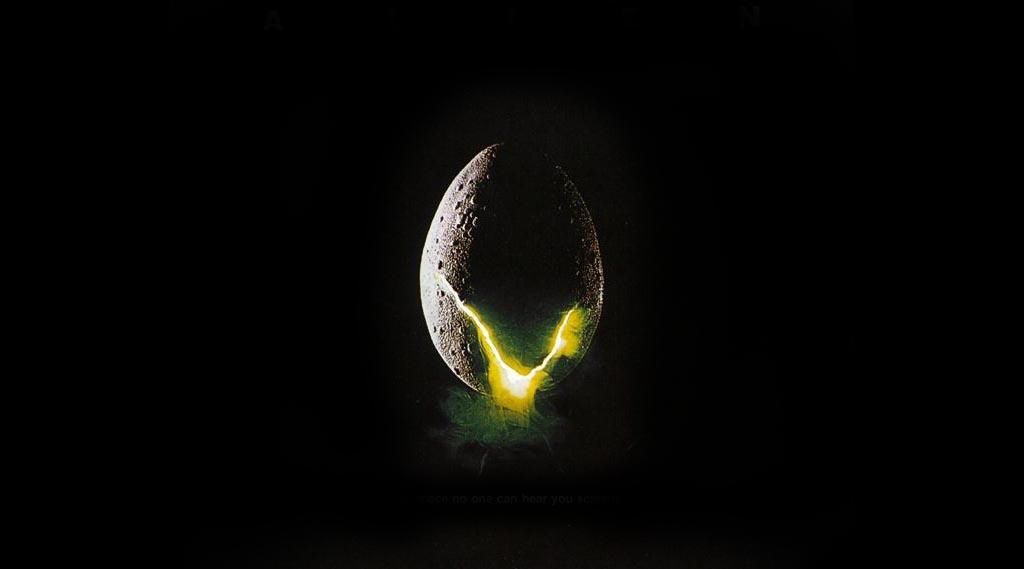
Egg.

Not that I was truly compelled to rewatch "Alien" solely because of "Prometheus'" release, as viewing the former once more was already in the back of my mind even before the latter was even green lit. And watching it after more than 5 years, it was as if I'm seeing something new altogether. 

Perhaps my slight cluelessness brought about by the years of not watching this film is, in a way, a thing of envy for die-hard "Alien" fans and even a fantasy realized for most movie watchers. As a long-time film lover, I know that there's this ever-recurring yet far-fetched idea among compulsive cinephiles of being able to wipe their memories clean so that they can enjoy all of their favorite films once more without knowing what's going to happen next. 

I, for one, would love to watch "Predator" again without any 'action hero' bias towards Arnold Schwarzenegger so it will once again be a genuinely thrilling experience. 'Who will die next?' A simple question that is indeed one of the guilty pleasures in all of cinema and one of the meager delights of an avid suspense fan. Perhaps that's what I have felt while watching "Alien" once more, and it was indeed a wonderful high. 

Of course, one can't deny how well-made this film really is and how its simple premise has brought it to its legendary status that we all know of today, but I have never remembered it, more than half a decade ago, to have contained such exceptional performances. Sigourney Weaver's performance for instance, after watching it again, has been enhanced to a certain extent and was even more believable than I last remember it to be. 

Her transformation as Ellen Ripley, from a dead serious female crew of the Nostromo to a brave heroine by circumstance, is such a powerful slow-burner that her intense metamorphosis is still being repeatedly used as the model character arc for sole survivors in many films of the same kind even to this very day.

But although this 'zero to hero' arc has been used a year before "Alien" was released in the form of Jamie Lee Curties as Laurie Strode in "Halloween", Ellen Ripley is a hundred times more chilling in how she has responded to her situation mainly because the survival rate in space, paired with a murderously invulnerable Xenomorph, is relatively low compared to a suburban neighborhood hunted by a slow-ass, Captain Kirk mask-wearing Boogeyman. And also because, let's admit it, playing this little survival game in space is infinitely more intensely terrifying to behold. 

But the "Alien" experience, as we all know, wouldn't be that unforgettable if not for Ridley Scott's exquisite direction, Dan O'Bannon's (rest in peace) simple but effective writing and H.R. Giger's iconic creature design. Taking one out of those three will surely render "Alien" quite deficient and lacking so it's fortunate that they have created a film so good that it has bred an expansive franchise and even cross-over films, much, of course, to the delight of fans who wanted more of it.

And then there's the rest of the cast, which consists of Harry Dean Stanton, Tom Skerritt, John Hurt, Ian Holm, Veronica Cartwright and Yaphet Kotto. If I am to look upon that particular line-up of actors without a further knowledge that this is indeed a science fiction film about a murderous alien in a spaceship, I would have mistaken this to be an elegant ensemble drama. 

Indeed the talent of "Alien's" cast has made O'Bannon's writing more natural on-screen, as they have truly provided it with human spontaneity that an otherworldly and literally alienating film like "Alien" crucially needs. Their performances were not legendary by any means, but their chemistry exudes a certain relational authenticity that it has been the strong, primary highlight of the film just second to the very arrival of the extraterrestrial slaughterer itself. 

Now, look at it again: The Nostromo's crew sitting around a white, futuristic table, eating futuristic foods while taking about home. Aside from the creature itself, isn't that what you'll remember most about "Alien"? 

But after all, what has really made "Alien" a legendary classic? Well, if you look at it, the story is too simple to even qualify as such, which plainly concerns the crew of a commercial spaceship named "Nostromo" and their unlucky encounter with a not so accommodating creature that serves as the antithesis of Spielberg's "E.T.". "Alien" does not even possess "2001: A Space Oddyssey's" mystical ambiguity or even "Planet of the Apes'" revolutionary utilization of a twist ending.

So what, then, has made "Alien" so special? I believe it is how the film exemplifies the greatness of having just the right amount of everything. It's a science fiction film that does not bite more than it can chew, it's a suspense movie without the usual overkill and it's a monster movie without the visual excesses. The performances do not dominate and even the creature lurks in the blackest darkness, teasing you with the terror that it entails rather than scaring you with its physical wholeness and its tails (Why? I want to make a rhyme, damn it!). "Alien" is a film that wants you to look at the vast emptiness of space not as a purely meditative speculator asking the 'whys', 'wheres' and 'hows' but as a cautious spectator asking the most perverse 'what ifs'. 

"In space, no one can hear you scream". Just reading that tagline alone is enough to send genuine shivers down your spine. Watching the film is even a taller order for your nerves to handle. Beware of its scares but be compelled by its greatness.

FINAL RATING
Photobucket

Wednesday, June 6, 2012

Prometheus (Ridley Scott)

The monolith head.

It's not a highly intelligent science fiction film or a purely imaginative Ridley Scott creation. But what makes "Prometheus" a picture that is worthy of all the hype that it has amassed throughout its promotional phase is one word that Ridley Scott was able to strongly uphold: audacity. 

Even now, I can't say if "Prometheus" is really necessary because however original this companion piece may be, the first "Alien" film will always stand on its own strong feet as an untouchable and seminal science fiction work that dared the darker mysteries of outer space like never before and, probably, never again. 

Being announced as an indirect prelude to the events in "Alien", it's given that "Prometheus" will hand out some answers to things that the said sci-fi horror classic have left quite ambiguous for so many years. And with its trailers leaving an impression that this will certainly be a film of significant magnitude, it's also given that this will also expand the "Alien" universe even more. 

The result is certainly not the greatest prequel or Ridley Scott film that we'll ever see, but it is, nonetheless, a brave piece of filmmaking that clarifies as much as it raises new questions and is also a science fiction film that balances the scares with some far-reaching concepts of human creation. 

It stars Noomi Rapace of the "The Girl with the Dragon Tattoo" fame as the perfect actress to channel Sigourney Weaver's intense portrayal of bravery and claustrophobic fear in the "Alien" films as Ellen Ripley. Here, Rapace plays Elizabeth Shaw, an archeologist who, along with a ragtag crew with the same intent for discovery, was commissioned by the mysterious Weyland Corporation (look for a geriatric Guy Pearce) to brave the far reaches of the outer space and land on a distant planet to unearth a key that may or may not hold the answer to our deepest inquiries about the origin of the human race, or its annihilation. 

Aided by a humanoid named David (Michael Fassbender), who's greatly fascinated with Peter O'Toole's turn as T.E. Lawrence in "Lawrence of Arabia", and watched upon by an antagonistic Weyland Corporation representative named Meredith Vickers (Charlize Theron), the team set on to do what they were tasked to do, but not without some magnified mishaps or two. 

For a science fiction film dealing with the typical 'mission gone wrong', 'not knowing what we're dealing with here' theme, "Prometheus" is strictly a standard venture. But despite of that, it's still a high concept film that may surely be flawed at some point, but is nevertheless thought-provoking both as a prequel and as a stand-alone film. 

Opening with a highly unusual scene of a muscular, Dr. Manhattan-like creature that looks more like a character taken from a 'sword and sorcery' film rather than from the world of hard science fiction, "Prometheus" introduces itself as a tall cinematic mythology. And with this type of prologue of sorts, Ridley Scott is evidently on to something here that's bigger in conceptual scope compared to the first "Alien" film. 

But with such expansive ambition is a most critical issue of whether or not it can really deliver the promised goods. Like 2011's sleeper hit "Rise of the Planet of the Apes", "Prometheus" is a film that is burdened with the pressure of conveying a very interesting story that can hold its own ground but can also pull off a great feat of patching up questions of origin. 

For some veteran directors armed with such films as "Alien" and "Blade Runner" in their resumes, it's not that unusual at this point in their lives to be highly contented with what they have contributed to the film industry. Look at George Lucas and his countless re-releases of "Star Wars" and you'll know what I'm talking about. However, for Mr. Scott, it seems as if he's veering away from what Mr. Lucas, right now, is doing. 

Instead of squeezing dry a highly lucrative franchise like "Alien", and with that I mean desperately pitting an aged Sigourney Weaver once more with the wretched Xenomorph in a most ill-advised "Alien 5", Ridley Scott, nearing the twilight of his career, is brave and still confident enough not to do that but has instead created something that merely revisits the franchise but whose main intent is to refresh it. 

The result may be imperfect, but what I adore most about "Prometheus" is not much about the very execution itself, although it has great merits of its own (particularly the strong performances by Rapace, Theron and Fassbender), but the sheer bravery of touching and expanding "Alien's" cinematic universe while also maintaining the integrity of narrative originality.

Surely, fans may be infuriated by how, in some ways, "Prometheus" has ruined the simplistic mystery and horror of 1979's "Alien" by way of its exposition. Though that can surely be a case in point, I admire how the film took a more mythological approach to counter "Alien's" style of silent, straightforward terror. 

"Prometheus", as a prequel, gave enough answers regarding how one of the most despised movie creatures of all time came to be. But with that, the film has also left fresh new questions to ponder about. Not since "Blade Runner" have I ever been more satisfied with how Ridley Scott has left some things open.

FINAL RATING
Photobucket

Tuesday, May 15, 2012

Iron Man 2 (Jon Favreau)

Mark V.

With the anticipation that surrounds the film as to whether or not it can live up to its predecessor and if it can really give 'War Machine' enough on-screen justice, "Iron Man 2" is a film full of pressures both as a sequel and as a build-up for a far greater thing: "The Avengers" (which is, as we all know, indeed great). Writing this review and knowing that the said ensemble superhero film is now considered as arguably the best superhero film ever made, the more I consider "Iron Man 2" as a mere front act to the real, larger-than-life Supershow. But then again, that does not mean that this film should be now rendered as entirely irrelevant; 'immensely flawed' may be the better description.

With Jon Favreau and writer Justin Theroux going semi-contemplative with Tony Stark's mortality for the better part of the film while at the same time being able to pull out a worthy (and more vengeful) enough villain from the deeper comic book pages to stand up against Stark and his 'world peace-privatizing' iron suit, "Iron Man 2" worked as a medium to channel Stark's true emotions and his response if faced by the idea of death and vendetta. Of course, being a sequel, it means that it will be less about seminal characterizations and more about how Tony Stark's character would be able to pull through for another film; trickier, really.

Now fully highlighting Stark's extravagant life and his brush with mortality, "Iron Man 2" should have been a film about emotions. While it may not be in the same emotional proportions like that of Batman's revisionist character arc, the film should have gone for something that is more existential in tone. "Existential?" You may ask. "Why fit in some heavy philosophical nonsense in a film built for nothing more than the usual thrills and entertainment?" You may follow-up. In all fairness, I've seen what the film has done, and that is to turn Tony, while in the process of finding a new element to combat the poisonous substance that the very technology that keeps him alive has been inflicting to his heart, into a self-destructive drunkard that recklessly goes his way through (what he believes), potentially, the final days of his life.

Yes, indeed that's what "Iron Man 2" has been quite successful in handling. But instead of giving us a more emotionally vulnerable hero that we can be able to care for more save for some of the disposable laughs, they gave us scenes where Tony Stark comes out as a total dickwad and not as a man suffering from mortal anxiety. Robert Downey Jr., as what he has always been, is very effortless as Tony, with the fast talks, verbal quips and all, but there's something in his Tony Stark now that is lacking. "Iron Man 2", evidently yearning for some emotional dimensions on Stark's part, may have written one funny sequence too much that is has made the film more of a transitional sequel rather than a follow-up that should have been more concrete in its emotional depth.

In terms of the cast, I really have no complaints regarding Don Cheadle replacing Terrence Howard as Lt. Rhodes, but there's something in Cheadle's eyes that tells me that he, playing Stark's best pal, does not want to be in it at all. While Scarlett Johansson, playing Natalie Rushman/Natasha Romanoff/Black Widow here, is there to serve as nothing but a prelude to his infinitely more integral role in "The Avengers". Gwyneth Paltrow is entertaining enough in the role of Pepper Potts and Sam Rockwell is, with all the superficial swagger and awkward flamboyance that he has successfully infused into the character, perfect as Justin Hammer, Tony Stark's incompetent business rival. Samuel L. Jackson, on the other hand, is surprisingly a bit too ghetto as Nick Fury that I can't help but think of another infinitely more 'double-daring' afro (please tell me that you get the reference) character in place of his eye-patched one here, specifically in the scene inside a diner, where I just can't help but imaginatively replace RDJ with a long-haired John Travolta.

But then there's Mickey Rourke, who was able to convey the silent intensity necessary as the revenge-seeking Ivan Vanko/Whiplash that Tony Stark's character should have provided in the first place (I think the writing is the one that's at fault here, not RDJ's performance). Rourke has given, what I think, the second best performance in the film (first being Sam Rockwell's) and, if the Academy Awards have awarded him the Best Actor for "The Wrestler" instead of Sean Penn in 2009, could have started an 'Oscars' trend for the "Iron Man" franchise here.

"Iron Man" featured Jeff "The Dude" Bridges as the villainous Obadiah Stane, who won his first Best Actor Oscar playing a lost, worn-out soul bent on redemption in "Crazy Heart". And now, "Iron Man 2" featured Mickey Rourke, who has been nominated and should have won his first Best Actor Oscar for playing a lost, worn-out soul bent on redemption in "The Wrestler". Struggling to finish this review, I have instead arrived at that 'Rourke should have won the Oscar' sentiment yet again after all these years. It's a pity that I'm yet to be at peace with that. But then, coming back to the real film at hand here, it's also a pity that "Iron Man 2" came out as a bit forgettable, came up short with its true emotional potential and is even lesser in its action sequences compared to the first film. The climactic set piece is cool though.

FINAL RATING
Photobucket

Friday, December 23, 2011

Donnie Darko (Richard Kelly)

Donnie and the Manipulated Dead.

(Note: It's the Director's Cut that I have seen)

I think it's quite a mistake to brand "Donnie Darko" solely as a horror let alone a thriller film. Sure, the film's prevalent elements suggest that it is, but the film completely transcends both genres to which it's most commonly attributed to. On the other hand, I can't also say that the film is inclined to be a full-fledged drama film either, as its emotional content is often times overshadowed by the film's overwhelmingly menacing visual texture. A film written and directed by Richard Kelly, it's a film that I have fully expected to deliver and also to disturb, but its thematic complexity I haven't seen from a mile away. It's one of those films that you're going to watch for the first time out of curiosity but for the second strictly for cathartic clarity.

"Donnie Darko" is a deceptive film that, in initial impression, asks for nothing but your senses, making you think that it's merely one of those typical psychological thrillers, but then catches you off-guard with its beautiful convolutions and blasts your senses and your bedazzled mind away. It is a difficult watch, mind you folks, but not in the sense of how epic period films are. It's difficult in a way how reading a complex literary gem is: intellectually frustrating, even discouraging in the beginning, but is ultimately rewarding.

Description-wise, it's quite challenging to state what this film is all about in a one paragraph, five-sentence synopsis. But seeing it fit to combine various films to create an impression of what the film might look and feel like for braver souls who may want to give it a go, then this is how I see it. It's like a cross between Paul Thomas Anderson's "Magnolia" and Sofia Coppola's "The Virgin Suicides", with Brian De Palma's "Carrie" and even Stanley Kubrick's "The Shining" dually sneaking somewhere in a dark corner to provide the dream-like scares. That and some heavy-handed concepts of time travel.

Set in an 80's American suburbia, it's a bit of a stretch for the film to have etched some fantastical science deeply into itself. But with what I've said earlier, seeing that the film's true motive, at least from how I see it, is to give its characters dramatic pay-offs that are wholly unique (producing a sense of emotional catharsis out of the idea of portals and vortexes) in terms of how they were built up more than to depict an adolescent schizoid's mad internal world, it has nonetheless made the film's distinct mood shifts and tonal overlaps seem justified.

Jake Gyllenhaal, now a very fine actor of considerable fame, can be proud to call "Donnie Darko" as his great coming-out party, but the same can also be said regarding how Richard Kelly and company felt about Gyllenhaal's performance. Seething with deranged half-smiles and enigmatic behavioral patterns, it can easily be surmised that his Donnie Darko, a teenager with distorted visions of an impending oblivion and an evil-looking, six-foot tall rabbit, is one murderous freak. But on the other hand, with his acting talents winded to the fullest, Gyllenhaal was also able to merge those with childish tenderness and youthful naivete. With that, what came out is a character that may externally be judged upon as a doomed nightmare incarnate but is, after all, still entirely human.

One may regularly see people dressed as Donnie Darko on certain Halloween parties but I think he's not meant to be seen like that. "Donnie Darko" is a film that agreeably shows the dangers of psychological distortions but does not focus on its negative consequences but on how it affects lives in ways both unexpected and unseen, either good or bad. For some, with this kind of character treatment, it's an opportunity to yet again exploit give-away murders and bloody mayhem that may even breed dreadful sequels, as it is even quite fitting to see the title "Donnie Darko 2" dwell in movie marquees, complete with cheesy taglines that border on the desperate, but I'll just stop right there.

The film may or may not have provided all the answers regarding its hidden truths, but nevertheless, "Donnie Darko", with its conceptual complexity that deservedly inspires an intellectually stimulating post-viewing discussion or two, has awaken my ever-analytic sensibilities and my urgent need to understand. It is a film that achieves to simulate the sensation of reading an intriguing little book without trying very hard to do so. The film, for the magnitude of its ambition, can easily be branded as nothing but extreme cinematic pretense on Richard Kelly's part, but what it surely can't be accused of is cowardice of vision. A true modern classic, I believe.

FINAL RATING
Photobucket

1001 Movies You Must See Before You Die

Ivan6655321's iCheckMovies.com Schneider 1001 movies widget