Showing posts with label Avenger. Show all posts

Sunday, March 30, 2014

Captain America: The Winter Soldier (Anthony Russo, Joe Russo)

The cracks in S.H.I.E.L.D.

Every time a Marvel film is released, an altogether new reason arises for DC people to tremble in their complacent seats, and "Captain America: The Winter Soldier" is just the kind of Marvel project to make them all apprehensive (and more) while they try and cram almost everything under the sun in that upcoming "Batman/Superman" film. If DC, as of now, is an image of inconspicuous pressure because they're still quite unsure about what to do with their product, Marvel, in comparison, is kind of like the scout leader who's as organized and assured as all hell. 

In all honesty, "Captain America: The Winter Soldier", in terms of its storyline, does not really feel like a superhero movie but more like a stoic political thriller. And though it's being considered by many as the best solo Marvel film to date (some even consider it highly superior to "The Avengers" itself), some may also argue that the reason it became such a quality movie was because it really didn't try to be a superhero film in the classical sense. Its conflict, for instance, doesn't materialize from a formidable villain who wants to proverbially take over the world but from within the ranks of the titular hero himself. So, basically, what makes "Captain America: The Winter Soldier" so great is that it highly contradicts the notion raised by Joss Whedon's "The Avengers" that everything is well and good within the conspiracy-crushing, Chitauri-manhandling organization that is S.H.I.E.L.D. If "The Avengers" is the seminal sing and dance for Cap and company, "Captain America: The Winter Soldier" is the part where the music suddenly stops. And if the said ensemble superhero film is the colorful celebrity magazine, "Captain America: The Winter Soldier" is freakin' WikiLeaks. The S.H.I.E.L.D., as expected, is really not what it seems to be, and Captain America, the symbolic super-soldier representing pride, honor, and all the other positive adjectives you can possibly think of, is predictably dead set in getting to the bottom of it, and the result's explosive in every sense of the word. 

Chris Evans, who we formerly knew as the 'Human Torch' guy who just happened to nab the Steve Rogers role (many were skeptic about him back then), has firmly grown in the role, with him getting better at it with every film. In "Captain America: The First Avenger", he was believable as the likable misfit who suddenly becomes a dependable (not to mention indestructible) super-soldier whose orders American soldiers eagerly anticipate. 

In "The Avengers", he has shown that a pretty boy like him can confidently bark orders at the likes of Robert Downey, Jr. and hold his own ground against Samuel L. Jackson in an on-screen argument. Here in "Captain America: The Winter Soldier", Evans has delivered his most multifaceted performance to date as the patriotic, U.S. flag-clad superhero by emphasizing the fact that Steve Rogers is as wary of the present as he is haunted by his past. And that despite his seemingly all too perfect track record as an unreal specimen of a foot soldier who gets things done, he is all too puny compared to the entire conspiracy that's slowly poisoning the S.H.I.E.L.D. from the inside. 

Evans, who's now relatively edgier in the role, was able to makes us believe in this film, in all his facial expressions and displays of physical struggle, that this may just be the first time an Avenger will be vanquished. Even Nick Fury, who we all consider as this eye-patched badass who does nothing more than eagerly watch the Avengers' every move behind closed doors and on computer screens, was fleshed out in a way that makes one think that this entire Marvel Cinematic Universe, if stripped down to the characters' bare essences, is basically a series of films starring a bunch of head cases with a death wish who all just happen to want to save the world. And just like "X-Men: First Class", "Captain America: The Winter Soldier" effortlessly adopts an additional layer of complexity due to its dose of political intrigue. 

Essentially, the film's dominant priority is to be a potent spy feature, and as a movie fan, it's just valid to label this film as an intense yet patient espionage thriller despite it starring one of the most unsubtle superheroes of all time. And just as we thought that the film's layered plot line is compelling enough, here then cometh the titular villain, played by a genuinely intimidating Sebastian Stan. 

For comic book fans, it's common knowledge that the so-called 'winter soldier' is Bucky Barnes: Steve Rogers' best friend from years past. And for casual film fans, it's given that this is a great opportunity for the film to give proper focus on emotional exposition, which it just did in a fashion similar to "Star Wars", specifically the chemistry between Luke Skywalker and Darth Vader. Added bonus is the magnetic performance by Robert Redford, whose involvement in the Tony Scott-directed "Spy Game" legitimizes this 'superhero' film as an equally game spy picture that's very much at home in wrecking big-ass Helicarriers as it is confident in staging quiet, clandestine conversations within soundproof rooms. 

In short, "Captain America: The Winter Soldier" is infinitely more than just an escapist fare because it has a little bit of everything (even Falcon's here!). With its non-campy seriousness and a serviceable lack of implausible humor (unlike the swords and punchlines epic that is "Thor: The Dark World"), this film officially makes it known that Marvel is indeed capable in producing not just great superhero films, but also great, well-written films, period. And if superhero films typically cram everything they can within the limitations of the climax, this film is seemingly unstoppable, as it unleashes one awesome setpiece after another while still fully preserving the integrity of its sophisticated narrative. Also, this teaches revisionist Hollywood of today that superhero films can appeal to modern audience without so much as darkening a single inch of the narrative or brooding up the main character's back story. Now, I wouldn't end this review with a tired "Your move, DC!" catchphrase because, as of this moment, there really is no rivalry. Marvel is at the top of the heap by a wide margin, and it will take more than the combined appeal of Batman and Superman to dethrone it. Marvel's bigger than U.S. Steel.

FINAL RATING
 photo 452-1.png

Friday, July 29, 2011

Captain America: The First Avenger (Joe Johnston)

Cap.

The most outstanding testament of how Marvel handles its core superheroes with utmost care in films, this is truly, without a doubt, the best Marvel movie that I have seen, or to be more exact, the finest 'Pre-Avengers' Avenger movie out there. It has certainly balanced the typical side humor present in almost all popcorn flicks with its action sequences that make it all the more explosive and entertaining. It's a war-torn celebration of patriotism and outlandish strength, and who would be better to represent such a film but the most obviously propagandistic superhero out there that is Captain America?

But a reminder to those who might be put off by the film's geographically-specialized protagonist, the film, directed by Joe Johnston like a true blockbuster filmmaker, is also quite conscious with its hero's stupendous status. Like a war-time satire, it highlights Cap's post-frailty but pre-hard hero masquerade as a symbolic mascot that parades around camp after camp and city after city to promote bravery and desire for clean-cut Allied victory. It partly worked because of Chris Evans' nuanced portrayal as a pretty boy figure that seemingly came out of the corners of the American Dream but whose outer motives is all but superficial. As told by the film's very fascinating look at Steve Rogers' literally 'small' beginning as a Brooklyn Boy U.S. draftee wannabe, his moral fiber is perfectly sound save for his physical built. But along came the scientific experiment and bam! Just like that, he's now muscular than ever and a genuine super soldier.

Now, based on the standards of common superhero origins, Steve Rogers' rise as a star-spangled super patriot is all too easy considering that Bruce Wayne got his parents killed before having enough inner strength to balance his conflict between being a hero and vigilante to become the legendary bat entity that he is. It can easily be said that Captain America's path towards being a superhero is relatively convenient compared to others, but with how the film has introduced his humble origins with a slightly sympathetic and sentimental view and then combining it with over-the-top occult and far-fetched science, do all superheroes really need to have some dark past to really carry out a great back story?

Strictly speaking, Captain America really is one of the few superheroes out there that really does not belong to an edgy reality. Although he existed in an era of widespread violence that is World War II, he's on a territory of his own. Some may say that his appeal is more inclined towards children more than it is for adults, but with his no-questions-asked fighting skills that the film has captured with its uniquely overblown (in a good way) Serial-style action sequences and a hardcore haze of Nazi foes, Cap balanced both demographic well enough. He's both a kid's dream idol and an adult's colorful nostalgia, and with "Captain America: The First Avenger", his myth as a Marvel character and as a most recognized figure of pop literature was finally materialized into the silver screen in a most overwhelming, and quite surreal, fashion.

With non-stop and knock-out (wow, two hyphenated rave adjectives in a sentence?) excitement and great performances by its array of actors, particularly Tommy Lee Jones in his Lee Marvin-like character, Dominic Cooper as Howard Stark and Stanley Tucci's bit performance as Dr. Erskine, it is a wonderful all-around cinematic experience.

But surprisingly, Hugo Weaving, considered the absolute go-to-guy for villainous roles (come on, he even voiced Megatron) and is also one hell of a versatile actor, is flatly one-dimensional in his role as Red Skull in a very 'James Bond villain' kind of way. But then of course, that might be intentional.

In countless alternate worlds where heroes and villains repeatedly play death-defying chess games of immense magnitudes with each other, Red Skull uses his mouth more than his hands. Words are not particularly useful when you got a boomerang shield heading into your face, you know.

"Captain America: The First Avenger" is like a grocer's errand boy who came late for your orders yet you find out that there's an extra something that he has put inside your grocery bags. We all know that a good Captain America film is long overdue, but as it finally came into our very midst, it exceeds the simplicity of the qualitative requirements of a decent movie. Instead, maintaining with the errand boy analogy, it 'delivered' with the silvery spark of a great action-adventure film. Sure, it's a given that Cap's 'Avengers' mates are extremely ecstatic about the film, but I instinctively know that elsewhere, Indiana Jones is also out there wearing a smile.

FINAL RATING
Photobucket

Monday, May 2, 2011

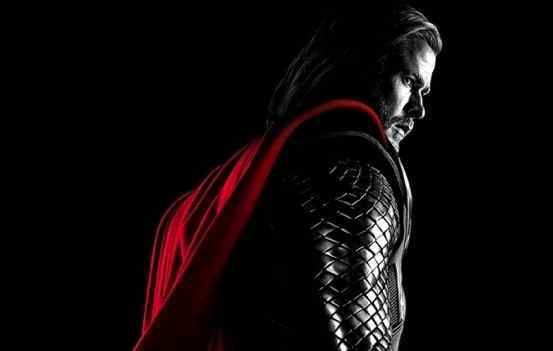
Thor (Kenneth Branagh)

Thor and a lesson in humility.

Now, I'm aware of how everyone was so shocked and so surprised when Kenneth Branagh was chosen to direct this film. Branagh, known to be not that fully acquainted with blockbuster films (although he has starred in a "Harry Potter" installment), has inspired countless speculators as to the reason why he has accepted such a directorial venture. Why would Branagh direct a Marvel film? Why is a Marvel film directed by a Shakespere-inclined actor with little to no experience with action-oriented movies? They asked.

Well, for me, the question should be the other way around: Does this film deserve its director? With that in mind, I watched the film, and in the final run, as I weigh on both the film's pros and cons, I have concluded that the film ultimately did. As for Branagh, well, he capably pulled it off. No sweat.

Chris Hemsworth, which on first impression may seem stiff, played the titular character with surprising effectiveness, comic arrogance, and romantic tenderness. Just his first innocently brusque sequences in the realms of Earth (in New Mexico to be precise) filled with uneasy flamboyance and Viking-like behaviors make his performance very special. Anthony Hopkins, playing King Odin, is your typical noble but strict patriarch. While Tom Hiddleston, the film's most surprising revelation, is quite effective as the chief antagonist and Thor's adoptive brother Loki.

For the human characters, Kat Denning's portrayal of Darcy tried some comic reliefs with all her references to current 'Generation Y' fads just so, you know, she can connect with the younger demographics' funny bones, but she failed. Gladly, she has shut up in the film's second-half. Stellan Skarsgard, always the capable character actor, is here acting within mere stereotypes.

Natalie Portman, on the other hand, is the typical brainy damsel who found some romantic connection with the powerful Norse God and has also been one of the reasons why Thor decided to protect the mortal world.

Now, we've already seen director Branagh play with the wonders of exquisite production design in his rendition of "Hamlet". But this time, he plays with the complicated and chaotic beauty of CGI. Scene after scene, it seems as if he is merely testing his ability to execute every digitally-altered shots that at times, except the establishing shots of Asgard and Jotunheim (where the Frost Giants live), the fast-paced action sequences all seem sketchy, sudden and a bit too shaky and dark. Even the climactic struggle in the Bifrost Bridge, although colorful, majestic, spectacularly surreal and emotionally critical all at the same time, is filled with physically lackluster series of weapon jousting.

In one scene, we see Thor racing against time, flying with his hammer in hand, to confront his mischievous  brother Loki (Tom Hiddleston). It's from moments like this that superheroes of his kind have, time and time again, made names out of. Add up some intense music, battle-face expressions and fragile surroundings and we've got ourselves one perfect superhero situation.

But then the next scene shows Thor landing at the scene with obvious detachment. It could have been a 'great' moment right there, but the whole emotional atmosphere where Branagh could have invested much ultimately lacked the immediacy. In this scene, Thor seems lethargic and confused. What the hell happened?

But on a meritorious side, Kenneth Branagh, with the help of the hammer-clenching Avenger's expansive universe, created a wonderfully-prepared psychological conflict to put the idea of Thor's 'unconditional heroism' into a blurring test between his own kingdom's well-being, which he was born to love and to lead, and the mere mortal reality of Earth, where he learned to embrace the role of being a protector.

Is it his universe or the other? Is it Asgard or Earth? This film, for once, bravely responded without any certain cinematic answers. This is where Thor has succeeded. Throughout the endless showcase of might, magic, monsters and kings, "Thor" attained believability, at least in how a hero weighs in on what matters to him the most. In this case, Thor knows his priorities.

FINAL RATING
Photobucket

1001 Movies You Must See Before You Die

Ivan6655321's iCheckMovies.com Schneider 1001 movies widget