Friday, June 29, 2012

The Amazing Spider-Man (Marc Webb)

Spidey reboot.

Finally, it has now been released. Ever since the film's very first promotional picture showing Andrew Garfield, ragged as hell, in a new Spidey costume has found its way in the loving hands of the internet, many have been befuddled. Why reboot the "Spider-Man" franchise if there's really no need to? Granted, the third film has swallowed more than it can chew, but the franchise, in its majority, is still a collective of truly entertaining superhero films that has also amassed great box-office returns. 

Now enter "The Amazing Spider-Man", a film that has been an object of divisiveness well at least before the trailers were released. And now that it has unveiled itself to a very critical audience consisting of skeptical fans of the previous "Spider-Man" franchise and purist fans of the comic books alike, I think it's fair to say that, at last, the speculations, arguments and general polarization is now over. Skeptics can now merely fade into the darkness and some may now declare themselves as instant believers. This reboot, for the lack of a better descriptive word, is indeed amazing. 

Director Marc Webb, who became an instant indie darling after making "500 Days of Summer", has molded Peter Parker and the other characters away from the clutches of cinematic stereotypes, and has also finely weighed even both the romance and the action. Now, I have nothing against Sam Raimi's first "Spider-Man" film, but I believe it has executed its characters in a way that's very limited and shallow. 

Raimi's characters, including Parker himself, merely exist within the parameters that their character arcs have restricted them to be. For example, there's Mary Jane the girl next door, J. Jonah Jameson the bullish newspaper boss and Peter himself as the geeky hopeless romantic; all stereotypes. Their function is to work well within those character boundaries and nothing more, and what resulted is a film that's well-executed enough but with characters that aren't really that flexible in terms of development.

This reboot, on the other hand, has handled Peter Parker in a way that's very atypical yet at the same time very relatable. There's Andrew Garfield to thank for that. In playing Peter Parker, he has combined your typical comic book charm with a sort of "Generation Y" appeal that's as convenient to identify with as the next fellow. Here is a crime-fighting superhero that can regularly knock out petty criminals and thugs alike but won't bother to accept grocery errands from his aunt. Here's also a costume-wearing altruist who has the tendency of playing cell phone games while on superhero rounds. Not since "Kick-Ass" can we identify ourselves with a superhero more.

Even the Uncle Ben and Aunt May characters, this time played by Martin Sheen and Sally Fields, are now more emotionally realistic. 

While Emma Stone, playing the crucial part of Gwen Stacy, was successful in channeling her effortless charm in the screen while also being very convincing in conjuring a great chemistry with Garfield. Although this relationship between Peter Parker and Gwen Stacy was proven to be very effective on film, we've yet to see the rest of it so I have to give the chemistry between Tobey Maguire and Kirsten Dunst the softer spot in my heart. And let's just pretend that the interaction between Maguire's Peter Parker and Bryce Dallas Howard's Gwen Stacy in "Spider-Man 3" has never happened. 

And then there's the antagonistic role played by Rhys Ifans. Always the superhero with the most sympathetic of villains, movie-wise, Spider-man is now pitted against genetics expert Dr. Curt Connors/The Lizard (Rhys Ifans). Enslaved by his own inclinations to create genetically-modified human reptiles without weakness and also to simply grow back his amputated arm, Connors is our usual villain preyed upon by his own decisional miscalculations. But aside from sympathy, Ifans, with his melancholic performance, was also able to provoke empathy from us viewers. What if we were the ones who are missing an arm? How far will this disability push us psychologically? And, more importantly, what if there's a remedy, however extreme, that's presented right in front of our very eyes? 

Though some may find Connors' transformation from a mild-mannered scientist to a monstrously cold-blooded (literally) super villain to be too much like Norman Osborn's Green Goblin transformation in Raimi's "Spider-Man", the dimensions of Connors' character is what makes him different. Unlike Osborn, Connors is a sane man driven to the edge by his own physical situation. He is very much aware of his own distortions. He knows deep inside that he is on the wrong side. 

"The Amazing Spider-Man", despite of initial skepticisms, came out to be a great origin story that has been made even more excellent by the performances, the standard yet affecting screenplay and the special effects that has elevated this film from meagerly amazing to something that's genuinely spectacular. We also get to see the strongest incarnation of our beloved web-slinging superhero yet. 

Sure, Sam Raimi's "Spider-Man" trilogy is something that can be cherished for as long as there are fans of both comic books and superhero films, but I believe that "The Amazing Spider-Man" is the true Spider-Man film we all deserve.

FINAL RATING
Photobucket

Tinker Tailor Soldier Spy (Tomas Alfredson)

Smile, Smiley.

In "Tinker Tailor Soldier Spy", the reality of Cold War espionage has never been as coldly depicted. It's a film that's really intended to be emotionally distant from its viewers so that it can properly highlight the alienating undertakings that Cold War master spies have undergone themselves for a great 30 years or so for the sake of information supremacy. 

One of them is George Smiley, played by the ever-chameleon-like Gary Oldman in one of his most uncanny performances in a non-villain role, a master spy who is forced out of retirement to seek out a mole buried deep within the Circus' (the jargon for British Intelligence) ranks. What follows is a tensely complex story of half-baked allegiances, harsh inner rank politics and, looking at the bigger historical picture, the futility of it all. 

Oldman, a great actor known for his nerve-racking energy on-screen, is successfully sublime and grounded with his portrayal of Smiley. Despite of the lack of human warmth in the whole film, Oldman is able enough to capture the essence of Smiley's anxious humanity without being either too brooding or self-reflective. Here is a character and a man who is motivated not by his family and forced to act not by the pressures of those around him in the service but by a seemingly obsolete code of samurai-like proportions. He is compelled to do so because he believes there's still an enormously unfinished chess puzzle of fates between him and Karla, the mysterious Soviet spymaster that is both deceptive and brutal. In a tense world whose morality and loyalty is turning ever grayer by the minute, Smiley still believes in a black and white.

But then, finding the mole is a very tricky mission. He needs to go through a lot of red tape to arrive at something. Among the ones that Smiley must monitor (as potential leakers) are Alleline (the underrated Toby Jones), the Circus chief, and Haydon (Colin Firth), a superior intelligence officer that's having an illicit affair with Smiley's wife. 

With such great actors effortlessly horsing around with their respective characters, one can easily see the success of this film as a great acting ensemble. Add up talented young actors Mark Strong and Tom Hardy in the mix as the Circus' globe-trotting pawns and we've got ourselves a hell of a film. Oh, and did I mention that John Hurt is also in it? 

But then again, with the film capitalizing on natural overall silence as if to truly simulate the quiet intrigue of genuine espionage, "Tinker Tailor Solider Spy" gets its sustaining power not just from the actors but from the very material itself. Adapted from John le Carre's novel, which I'm more than tempted in buying from our local bookstore so that I can read it first before watching this (but never did), the film has captured the nervous essence, with its pale-colored cinematography that heightens the disillusioning effect, of the reality of spying without much glitter but full of quiet power.

To be exact, I have never witnessed such an intriguing 'backstage pass' of a film ever since, well, maybe Scorsese's "Casino". "Tinker Tailor Soldier Spy" is a rare film that does not indulge on cheap thrills just so it can maintain some sort of energetic flair in its narrative. Instead, it is a film with a great fly on the wall perspective that is as compelling and as frightening as the characters that populate it and the locations that make it whole. Director Tomas Alfredson is very commendable for not going overboard on some of the characters or faltering in the story department. 

Now, if some may want to argue that "Tinker Tailor Soldier Spy" is as cold as a walk-in freezer and that it will make you want to leave the second you enter it, then the film has succeeded. Its goal is not to sensationalize or commodify the reality of Cold War espionage for the general public but to render it as a cinematic mood, and it's your choice to either accept it as it is or not. But judging from its box-office returns, it's quite obvious that the film has compelled rather than disgust, and for that, the film is utterly effective and, in some ways, vindicated. 

"Tinker Tailor Soldier Spy" may just be fiction, but in the end, it's a story worthy of being told. It makes me want to grab that gargantuan "Smiley Versus Karla" compilation in our nearby bookstore, and fast. James Bond's great antithesis has finally arrived.

FINAL RATING
Photobucket

Kill Bill: Vol. 2 (Quentin Tarantino)

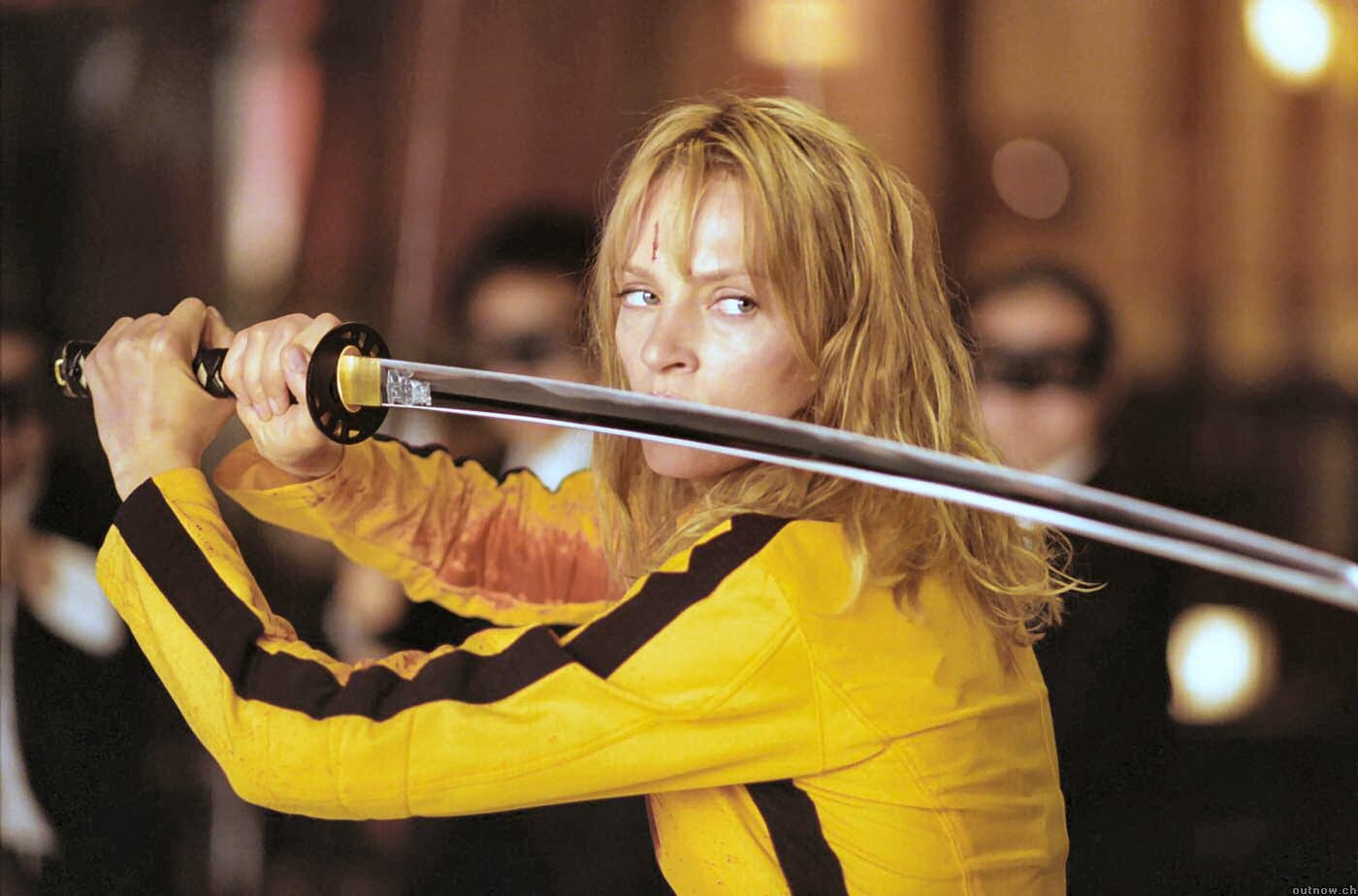
The training.

At last, we've reached the epic conclusion of Quentin Tarantino's "Kill Bill" saga (Okay, let's just pretend that this is the first time that I have seen it), and unlike what many have expected it to be, "Kill Bill: Vol. 2" is surprisingly more patient, mature and emotionally articulate compared to its predecessor. 

If "Kill Bill: Vol. 1" is, as what Roger Ebert has stated in his review of the film, "all about storytelling and no story", this film, in comparison, is a perfect amalgamation of style and substance, which Quentin Tarantino has perfected in blending over the years. 

This time, we don't have any gargantuan swordfights between Uma Thurman's "The Bride" and 80 other men, but what we surely have in this picture is genuine drama and a hint of heart. But that does not necessarily mean that "Kill Bill: Vol. 2" does not have any time left for some genuinely pleasurable ass-kicking courtesy of our vengeful bride. It sure does, of course. It's only that the fight sequences and moments of cruelty are far more compelling and emotionally involving this time around. 

As much as I love the showdown at the House of Blue Leaves between the bride and O-Ren Ishii's (played by Lucy Liu in "Kill Bill: Vol. 1") "Crazy 88" in "Kill Bill: Vol.1", there's honestly little to no emotional connection between me and the very essence of the blood-drenched sword ballet whatsoever. But here in this film, we are now more drawn and more empathetic towards the bride's self-imposed task of exacting revenge against those who literally gunned her down. Damn, we know that she can survive the House of Blue Leaves showdown in the first volume. But now, with "Kill Bill: Vol. 2" taking on a more grounded approach, can she still handle it all? 

In the first film, we are quite affectionate towards the bride's revenge but we are just too awed with the visual stylishness on display that we take her path of destructive revenge in the first film merely as a showcase of Tarantino's auteur flamboyance. But with "Kill Bill: Vol. 2" now preferring a slower pace, evidently shown in the film's opening scene of the bride's serene wedding dress rehearsal minutes before Bill and company blow her and her loved ones away, we are now more acquainted with the bride not just as a character that simply represents Tarantino's patented cinematic style but as a living, breathing character with a highly justifiable motive behind her every slicing of limbs and poking out of eyeballs. 

We are also introduced more to Elle Driver (Daryl Hannah), the eye-patched femme fatale who's the most painful thorn within the bride's throat next to Bill himself, and Bud (Michael Madsen), Bill's slacker of a brother who also had a hand in the infamous pre-wedding massacre. Oh and then there's also Pai Mei, played by Gordon Liu (who has already played the "Crazy 88" leader in "Kill Bill: Vol. 1"), a kung-fu master that's obviously Quentin Tarantino's great ode to the stereotypical 'martial arts master' character in countless genre films of the past with his overlong white mustache and exaggeratedly thick and contoured white eyebrows. 

And finally, there's Bill, played by David Carradine in what may be his most memorable character next only to Caine in "Kung Fu". Possessing the looks of a murderously ragged old man yet armed with the gentle demeanor of an old-fashioned lover, Carradine has perfectly captured the essence of Bill. For the record, I believe that Bill is not a villain as per what the word's typical meaning denotes. For that, Tarantino is truly commendable in how he has handled this particular character perfectly. 

There's a moment in the film where Bill, now face to face with the bride herself, explains himself as to why he has done the murderous deed. As if stating that his violent nature is imprinted deep within his soul and cannot be erased, he simply stated that he's a downright murderous bastard and he just acted based on his immediate compulsions when he found out that the bride, his former flame, is now about to be married to someone else. Though it cannot be denied that Bill is the monstrous incarnation of aggressive masculinity (he can't take romantic defeat), Quentin Tarantino is emotionally aware enough to depict Bill as a villain that's capable of explaining himself. 

For some, "Kill Bill: Vol. 2's" climax is highly anti-climactic because it has not exceeded the bar that the first film has set in terms of confrontational swordfights and bone-crashing fisticuffs. But seeing the dramatic potential of such a tale of revenge, Tarantino chose to be more calmly elegiac with it rather than being shallowly aggressive. It may not have ended with both barrels blazing (or 'both katanas shining' if you want to remain consistent with the martial arts analogy) in terms of action-packed physicality, but the film is still highly satisfying not because of its physical pay-off but because of its ultimate emotional confrontation between the vengeful woman and the man who has made this feeling possible within her. 

"Revenge is a dish best served cold" is the film's opening quote. For the bride, she served it straight from the freezer, but still, tears were shed. Revenge is a sad venture, and the film is fully aware of that fact.

FINAL RATING
Photobucket

Kill Bill: Vol. 1 (Quentin Tarantino)

The showdown.

Always the master of cinematic homages, Quentin Tarantino now offers us a martial arts genre-inspired, revenge-themed film that's best served cold. It's a film that highlights, in bright crimson red, the stupendously over-the-top craziness of martial arts films and how it has captured the imagination of many people who were lucky enough to have seen such pictures. But aside from being an ode to the martial arts genre, "Kill Bill: Vol. 1" is also a fiery introduction to what may be one of the most resonant revenge tales of recent memory.

In a world inhabited by code-bound katana makers (like Sonny Chiba as Hattori Hanzo here) and evil martial arts masters, it would have been out of place to put a frail blonde woman in the middle of it all. But Tarantino, now a filmmaker that has already reached his utmost potential for gender maturity, just did, and the result is truly rewarding. Quite ironic, really, for a director whose first film, the neo-gangster classic "Reservoir Dogs" doesn't even contain a single female character.

And with that, "Kill Bill: Vol. 1" has succeeded in showcasing Tarantino's directorial flair and sheer passion for, this time, everything martial arts. It simulates, as it renders a bygone era of martial arts films in a reinvigorated light, what it's like to be witnessing an old-fashioned film glazed with the language of the fist and the code of the sword once again.

Heightened by Uma Thurman's great performance as the vengeful bride on an unmercifully violent path of revenge who will stop at nothing until, well, he can finally kill the titular Bill, the film's effectiveness is not much because of the plot but because of how this seemingly tired story of blood-soaked revenge has trickily found its way into the screen looking completely different and strangely beautiful once again.

Some playfulness with non-linear narrative on one side, some animation here (one of the most striking features of the film) and a subtly powerful use of 'chapters' there; the clever amalgamation of these aspects has not just made the film something that's truly riveting to watch at surface level but also an intensely unforgettable portrait of what wonders a truly passionate cinephile of a filmmaker like Tarantino can do for a genre that's seemingly buried by time.

Going back to the very narrative, we can simply say that it's a story of a woman's revenge against a former flame that has attempted to kill her, but didn't. So what? What then? What's new? We are repeatedly being fed with films drenched in fearlessly bloodletting vendettas such as this one, with one being crueler yet less fascinating than the previous one. So, again, what's with all the fuss?

Well, the answers for all of those lie within the very film itself. The film, for a lack of a better persuasion coming from yours truly, needs to be seen to be believed. To be seen as a highly stylish action film. To be believed as a truly unique cinematic experience.

"Kill Bill: Vol. 1" may not possess the complexity or depth of "Pulp Fiction", but at the end of the day, its distinction as a great Tarantino film by its own right lies not within the plot or the characters themselves but within the courage of pulling off such a film and how it was done in the most brilliant of ways and the most outlandishly exceptional of styles.

In a time where movies wallow on old ideas that pretend to be something new, it's invigorating to watch a film that's humble enough to embrace old ideas but ingenious enough to render it familiar yet fresh all at the same breath. This film may not necessarily be the 'one' that will immortalize the martial arts genre, but it sure has put the seemingly forgotten genre into prominence once more, and dare declared the greatness of its peculiar aesthetics.

FINAL RATING
Photobucket

Sunday, June 17, 2012

RoboCop (Paul Verhoeven)

Murphy.

Films like "RoboCop" are the prime reasons why the action scene of the '80s is truly the best there is. In a time where highly-paid action stars are being manufactured for the sake of non-stop, shallow-minded feast of blood, guns and guts, "RoboCop" stands tall as that rare work that mixes delicious satire, brutality and inspired originality in one action-packed entirety. 

It stars Peter Weller as Alex Murphy, an honest, hard-working Detroit police officer that was violently murdered in action by a ruthless gang led by the notorious Clarence Boddicker (Kurtwood Smith). But because of revolutionary technology, he was resurrected back to the land of the living hardly as a man anymore but as a law-upholding, well, as what the title suggests, robot. 

But wait, there's a catch right there: his memory box is not fully wiped out. So guess what? He wants revenge. Motown is in for a ride. 

Paul Verhoeven, a truly visionary action and science fiction filmmaker, is arguably at his definitive best here. Possessing a unique vision for action that certainly can't be surpassed even by today's standards, Verhoeven paints every action scene with an attention for the explosive and the absurd. His action sequences are those that are inclined to shock, to excite and even to put a sardonic smile in a viewer's face all in one stride. For instance, if some action films utilize blood squibs for the sake of enhancing the effect of a gunshot wound, "RoboCop" uses it in a more ironic fashion. The said prop has instead been used to enforce a more cartoonish depiction of violence, which is greatly significant for the film's prevailing satirical tone and its distinct comic book feel. 

So with that being said, what is it that "RoboCop" is satirizing then? Very much like Frank Miller's "The Dark Knight Returns", "RoboCop", finely written by Edward Neumeier and Michael Miner, ingeniously pokes fun at what news programs may look like in an unstable future: A short running time, a couple of all-smiling anchors and an overly feel-good atmosphere ironic to the news at hand. Oh, and did I mention that this film is also a slight attack towards capitalism and consumerism?

As seen in the film's numerous faux TV commercials, there's this unforgettable TV ad in "RoboCop" that shows the fictitious 6000 SUX (a new car model) immensely dwarfing a dinosaur (which, I don't know, may symbolize the olden, more innocent times of simpleton living). Such image proves that "RoboCop" isn't just an action vehicle that caters to audiences' need for some adrenaline rush but also a timely commentary to our declining discernment between need and want. 

In a few years' time, we may just as well buy everything that the television tells us to. The film capitalizes in this sort of pessimistic view of capitalism and misuse of the media and made quite an unforgettably satirical impression out of it. 

But aside from conceptual originality and an iconic RoboCop design (by Rob Bottin), which are the primary reasons why this film is highly successful and was even able to attain a cult following, another potent reason as to why "RoboCop" is truly special is because of the performances. 

Led by Peter Weller's restrained approach to the Alex Murphy character, the cast is simply terrific. Although the performances were in no way deep or complex, they were uncannily energetic enough for the film to maintain its entertainment level even without the high-powered action sequences. 

Take Miguel Ferrer as a great example. He plays the ambitious and bureaucratic Bob Morton who, despite of being a cold-blooded douche, made Murphy's transformation as RoboCop possible. Ferrer, in all of the scenes in which he is in, is armed with a great sense of timing and articulate unorthodoxy that it's entertainingly exhausting to watch him perform. 

Same goes for Kurtwood Smith as the villainous Clarence Boddicker, who is so good in playing a major villain here in "RoboCop" that he was offered an equally despicable role again in "Total Recall" (also directed by Verhoeven), only to turn it down. While Ronny Cox, playing Richard 'Dick' Jones, the vice president of the film's fictitious corporation named Omni Consumer Products (OCP), is the stereotypical image of a purely manipulative corporate villain. Although contained within the limitations of a generic character, Cox was able to squeeze out something special and distinctive from the role. As for Nancy Allen, she plays Murphy's partner on duty with pristine calm. She is the image of sanity in the film. 

For jaded viewers, it's difficult to distinguish the gold from the dung in a genre (in this case, action) that is more inhabited by the latter. For me, watching "RoboCop" renders this viewing cynicism as untrue. Even from afar, it's easy to see this film's golden makings as a true action masterpiece even if you put it in a damn septic tank. And despite of the occasional garbage that may surround it, its greatness shines forth through the heap. 

"RoboCop" is one of the best action films of all time, and unlike other action pictures of the same kind that were made solely for the specific era to which they belong, this film transcends time. It has aged supremely well, and its entertainment and shock factor are just as potent as they were almost 30 years ago. This is one for the books.

FINAL RATING
Photobucket

Saturday, June 16, 2012

Mad Max (George Miller)

Max is...quite mad.

It has been widely believed that ever since "Mad Max" was released, action films have never been the same again. It has introduced a more frenetically-paced action style and also a purer form of utter machismo and brutality that has since been the staple themes of almost all of the action pictures that have followed after it. In a way, the whole '80s to mid '90s action film scene is highly indebted to "Mad Max" because without it, there wouldn't be a need for such red-blooded films. And also, without this seminal George Miller classic, the world of bullet-spraying, revenge-driven heroes inhabited by the likes of Arnold Schwarzenegger and Sylvester Stallone would be devoid of another equally important action icon: Mel Gibson. 

But then more importantly, this film has significantly done something that can be compared to what "Jaws" has done to the beaches or what "A Nightmare on Elm Street" has done to dreams: "Mad Max" has made us fear the open highways. 

Judging from its narrative, "Mad Max" has nothing remotely surprising going on. It also does not help that the film has some irritating side characters and a lazy dubbing. With that, "Mad Max" is nothing more than a B-grade little film that, despite of its overly rough edges, has managed to unconsciously revolutionize a whole genre. 

Made in 1979, the film has aged quite badly both in editing, sounds and script. Even the performances are quite cheesy and cartoonish. The plot, for the lack of a better word, is almost non-existent. The car chases are quite new at the time but are nowhere near of being unique and truly fresh. 

But then, after all of these overbearing cons, there's "Mad Max's" universe. Making it appear as if the empty expanse of the speedways are the final frontiers of an apocalyptic Australia, the film's imaginative vision of a world gone way, way awry is a thing of peculiar beauty and originality. 

Oh, and there's an attempt of being prophetic too. Labeling "Mad Max's" time frame as 'few years from now', the film is also quite successful in creating an illusion of plausibility that I can surmise is quite alarming and frightening at the time of its release.

With an intention to create an insane, 'anything goes' world devoid of swift justice, George Miller and company have created a surrealistic neo-western world with an atmosphere reminiscent of "High Noon". Only this time, Frank Miller and company are now mentally unstable bikers and Gary Cooper's Will Kane is now in the guise of a gutsy highway patrol officer named Max Rockatansky (Mel Gibson).

"Mad Max", amid the immensity of its negative aspects, is a finely realized hybrid of a film that's armed with whatever's left of the cinematic sensibilities of the western genre yet heightened by a newer, more energetic style of action. 

Watching "Mad Max", after all these years of seeing action films with the same revenge-driven story, is like watching something new set in a more than familiar narrative landscape. Rooted in the film's use of clichéd storytelling, an aspect that has been one of the main reasons why action movie-goers has since been transformed into jaded ones, the film seem to render the plot secondary and the visuals as the main priority. And with that, I believe the film has succeeded not as a truly compelling action film but as a highly kinetic action fare fueled mainly by the spectacle and not the story. 

What resulted is an action-packed tale of revenge and justice that has given birth to a new breed of action films, and also to edgier protagonists bent not just on setting things right but also on pure, red-blooded retribution. 

Watching "Mad Max" today, I can confidently say that I've seen better action films. "Mad Max" is the Wright Brothers' prototype plane to Arnold Schwarzenegger, Sylvester Stallone and Bruce Willis' Boeing 747. The films by the latter action stars may be bigger in terms of scope, budget and larger than life characters, but nothing beats classic novelty. An interesting look back to where it all started.

FINAL RATING
Photobucket

Tuesday, June 12, 2012

Under the Hood (Eric Matthies)


Now, on with Hollis Mason's tell-all interview, along with many other recognizable characters, here in "Under the Hood". 

A short film that evokes the magazine-like news features of the '80s, "Under the Hood" is an effective secondary sweetener that gives your viewing experience of "Watchmen" a more intimate feel. Headlined by an aging Hollis Mason aka Nite-Owl in a sobering interview that tackles the story of his life, from his childhood years up to his days with the "Minutemen" and his subsequent retirement from masked vigilantism, "Under the Hood" is truly insightful both as a pseudo-documentary and as a precursor to much grander things in a parallel world teetering on the edge of chaos and oblivion. 

Of course, for some who have already read the graphic novel, this supplemental short film is nothing new. But as one of those who were slightly disappointed by Zack Snyder's "Watchmen" adaptation, it's still quite refreshing and commendable for Snyder and company to have conceived "Under the Hood" for the sake of enriching and extending their cinematic translation of "Watchmen" while also exemplifying an almost unsurpassed dedication to the source material. 

Now, what I liked most about "Under the Hood", aside from the sincere performances by Stephen McHattie (as Hollis Mason) and company, is the very genuine '80s feel of the whole short film that seemingly suggests media tranquility days or weeks before the world of "Watchmen" ironically heads into an imminent nuclear destruction. The fun little commercials also helped in heightening this sense of calm as products such as the very resonant 'Nostalgia' perfume populate the screen with a laid-back and feel-good advertising atmosphere. 

But this calm exterior slowly subsides, though almost unrecognizably, once the characters' opinionated insights come to play. Like a quiet bomb awaiting its own implosion, words uttered by the likes of Hollis Mason, Sally Jupiter aka Silk Spectre I (Carla Gugino is also great in this one) and even a very Woody Allen-like Wally Weaver have underlined the anxious fate that awaits both the remaining members of the Watchmen and the world itself. 

"We've been replaced". Hollis Mason sadly stated as he pertains to Dr. Manhattan's god-like status that, for him, replaces not just the costumed heroes of a bygone era like him but also humanity as a whole. But on the other hand, when asked about Dr. Manhattan, a street smart news vendor named Bernard (that's also one of the more significant bit characters in the graphic novel) highlighted Dr. Manhattan's great contribution by answering that America would not have won in Vietnam without him (of course, in "Watchmen's parallel universe, U.S. did won). Different people with different opinions that has since shaped the world of "Watchmen"; it surely is a joy both to hear and to watch.

Once started as an autobiographical interview cum advertising ploy for Hollis Mason's book "Under the Hood", the short slowly turns into a full-formed mosaic of opinions (by way of separate interviews) regarding issues prevalent in the "Watchmen" universe as given by different individuals ranging from flawed masked crime fighters of the past to ordinary bar owners and psychoanalysts. 

"Under the Hood", unlike "The Tales of the Black Freighter", is a film that cannot stand alone. Snyder's "Watchmen" must still be watched first (or the other way around). Speaking in terms of "World of Warcraft", "Under the Hood" is the "Frozen Throne" to "Watchmen's" "Reign of Chaos". A potent companion piece, "Under the Hood" is an effective "Watchmen" short that boldly underscores the world of "Watchmen's" proverbial calm before the storm.

FINAL RATING
Photobucket

1001 Movies You Must See Before You Die

Ivan6655321's iCheckMovies.com Schneider 1001 movies widget